
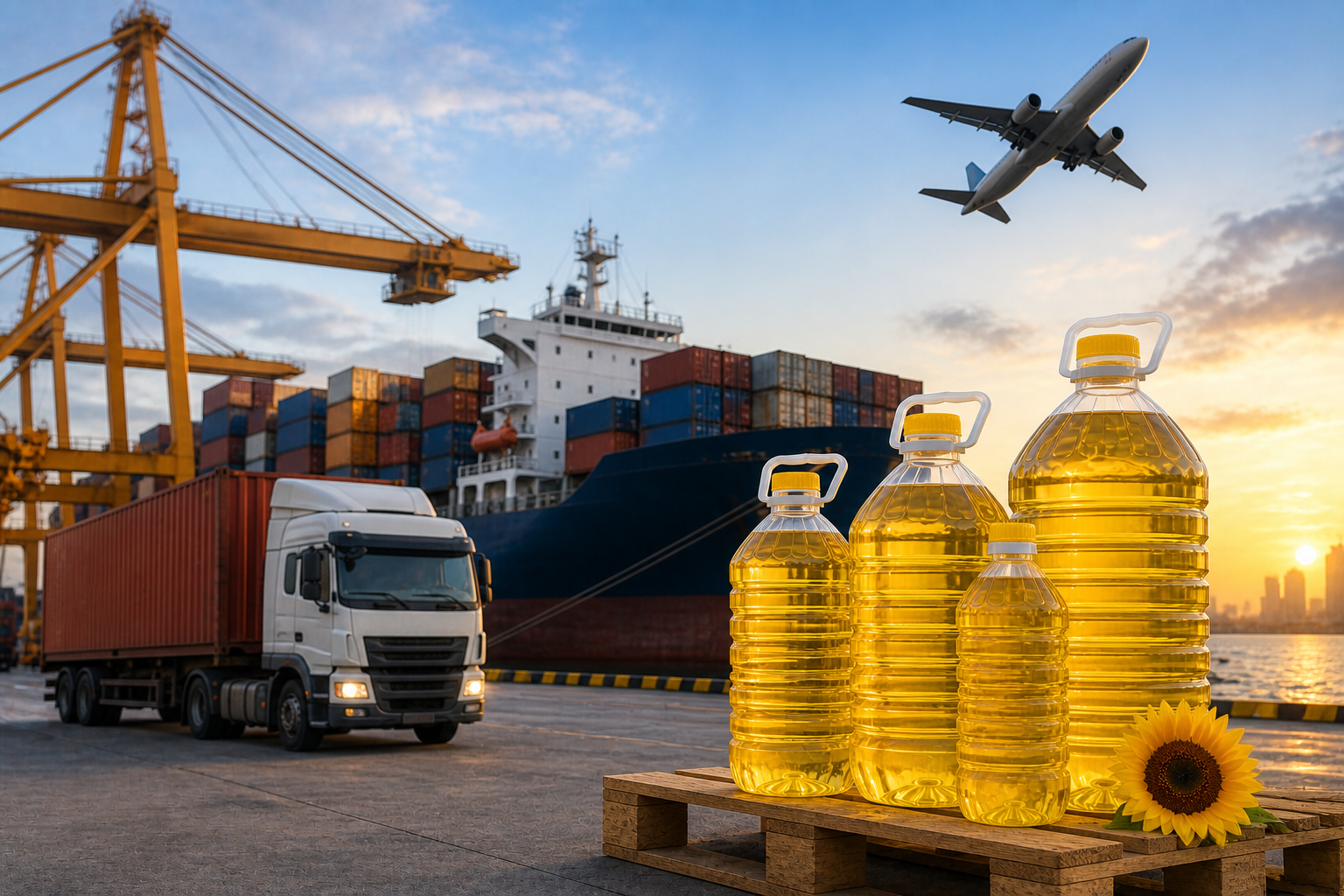
International Logistics for Sunflower Oil Supply
International logistics for sunflower oil supply is a structured process that connects production, packaging, transportation, documentation, and final delivery across borders. For importers, distributors, food manufacturers, and private label buyers, logistics is not just about shipping — it directly affects cost efficiency, product quality, delivery timelines, and supply reliability.
This guide explains how sunflower oil logistics works globally, from supplier coordination to final delivery, helping buyers understand how to manage bulk shipments and reduce risks when working with an experienced sunflower oil supplier.
—Understanding the Sunflower Oil Supply Chain
The sunflower oil supply chain involves multiple stages, each requiring coordination between supplier, logistics provider, and buyer. Unlike simple retail shipments, edible oil logistics must follow strict food safety and handling standards.
Key stages include:
- Production and refining
- Quality control and certification
- Packaging and loading
- Export documentation preparation
- International shipping
- Customs clearance
- Final delivery to warehouse or distribution point
Buyers who want to understand the full process can also review sunflower oil export operations and how imports work in Europe.
—Main Logistics Methods for Sunflower Oil Supply
Sunflower oil can be transported using different logistics methods depending on volume, packaging type, and destination requirements. Choosing the correct method is essential for cost efficiency and product integrity.
Sea Freight (Primary Method)
Sea freight is the most common method for international sunflower oil transport. It is used for both bulk liquid shipments and palletized bottled oil.
Typical sea freight options include:
- Flexitank containers for bulk liquid oil
- ISO tank containers for industrial shipments
- Standard containers with palletized bottles
For a deeper breakdown, refer to the bulk sunflower oil shipping guide.
Road Transport
Road transport is used for regional distribution within Europe or between neighboring countries. It is often used after sea freight arrival or for direct continental deliveries.
This method is suitable for:
- European wholesale distribution
- Retail deliveries
- Short-distance bulk supply
Rail Freight
Rail logistics can be used for transporting sunflower oil across Europe and neighboring regions. It provides an alternative for moving large volumes efficiently over land.
Multimodal Logistics
Most international shipments combine multiple transport modes, such as sea + road or rail + road. This is known as multimodal logistics and is standard for global edible oil supply chains.
Buyers can learn more about transport options at sunflower oil shipping methods.
—Packaging and Loading in Logistics Planning
Packaging plays a critical role in logistics efficiency. It determines how the product is handled, transported, and stored during the entire supply chain.
Common packaging formats include:
- Flexitanks for bulk oil
- ISO tanks for liquid transport
- Bottled oil on pallets
- Drums and intermediate containers
Each packaging type affects cost, storage, and unloading requirements. Buyers can explore more options through packaging solutions and packaging types for export.
—Export Documentation and Compliance
International logistics is closely linked with documentation. Without proper documentation, shipments cannot pass customs or enter the destination market.
Essential documents include:
- Commercial invoice
- Packing list
- Bill of lading
- Certificate of origin
- Food safety certifications
For full details, refer to export documentation requirements.
Buyers can also review official international trade rules through the ICC Incoterms guidelines.
—Delivery Terms and Logistics Responsibility
Delivery terms define who is responsible for transport, risk, and costs during the logistics process. Understanding these terms is essential for managing international shipments.
Common terms include:
- FOB: Buyer takes responsibility after goods are loaded at origin port
- CIF: Seller arranges freight and insurance to destination port
- DAP: Delivery to agreed destination (excluding import duties)
- DDP: Seller handles most logistics responsibilities
For a detailed explanation, see delivery terms guide.
—Logistics Challenges in Sunflower Oil Supply
International logistics involves risks that buyers must consider before confirming shipments. Planning helps avoid delays, cost increases, or product issues.
Common challenges include:
- Port congestion and delays
- Freight cost fluctuations
- Documentation errors
- Improper packaging selection
- Customs clearance delays
Understanding these risks helps buyers choose reliable suppliers and plan shipments effectively.
—Quality Control in Logistics
Maintaining quality during transport is essential for edible oil products. Logistics must protect the oil from contamination, temperature changes, and handling issues.
Key quality considerations include:
- Clean containers and tanks
- Food-grade transport materials
- Sealed packaging
- Proper storage conditions
More information is available in quality control processes and certification requirements.
Global food safety practices can also be reviewed via the FAO.
—Logistics Planning for European Imports
Europe is one of the largest import markets for sunflower oil. Logistics planning for European buyers must consider regulatory compliance, port infrastructure, and inland distribution.
Important factors include:
- Port selection and handling capacity
- EU import regulations
- Distribution network setup
- Delivery timelines
Buyers can explore country-specific logistics through supplier pages such as Germany, France, and Netherlands.
EU import standards can be reviewed at the European Commission Food Safety portal.
—Why Logistics Expertise Matters When Choosing a Supplier
Logistics capability is one of the most important factors when selecting a sunflower oil supplier. A supplier that understands export logistics can reduce risk, improve delivery efficiency, and simplify the import process.
Experienced suppliers support:
- Shipping coordination
- Documentation preparation
- Packaging selection
- Delivery planning
Buyers can compare supplier capabilities through supplier selection guides and exporter verification.
—Final Thoughts on Sunflower Oil Logistics
International logistics for sunflower oil supply is a critical part of global trade. It connects production, compliance, transport, and delivery into one coordinated system. Buyers that understand logistics processes can reduce costs, avoid delays, and build reliable supply chains.
For bulk procurement, private label production, or international distribution, working with a supplier that offers structured logistics support is essential. You can request a quotation based on your product, quantity, and destination requirements.
—Frequently Asked Questions
What is the main shipping method for sunflower oil?
Sea freight is the primary method, using flexitanks, ISO tanks, or containerized pallet shipments.
Can sunflower oil be transported by road?
Yes, road transport is commonly used within Europe for regional distribution after arrival.
What documents are required for sunflower oil logistics?
Key documents include commercial invoice, packing list, bill of lading, and food safety certifications.
What are the most common delivery terms?
FOB, CIF, DAP, and DDP are commonly used in international sunflower oil trade.
How do buyers reduce logistics risks?
By selecting reliable suppliers, confirming documentation, and choosing the correct shipping method.