
Documented Ingredient Sourcing for B2B Buyers
Non-GMO Sunflower Oil Supplier for Food Manufacturing & Export
Inter Oliya coordinates sunflower oil supply from Ukraine for food manufacturers, importers, distributors, supermarkets, foodservice operators and private-label buyers requiring documented non-GMO status. Orders start from 10 metric tonnes, with the exact product, producer, facility, batch, supporting evidence, packaging, destination and commercial terms confirmed in the written quotation.
- 10 MT MOQ Minimum commercial order
- From €910/MT Indicative starting price
- Documented Status Declarations, traceability and testing as agreed
- Worldwide Export Europe, UK and global destinations
“Non-GMO” is not treated as a blanket claim across every product. The quotation must identify the exact supply and the documents or test evidence supporting the claim.
Evidence Before Marketing
The non-GMO claim must be supported for the exact product, producer and order.
Seed-to-Shipment Review
Connect raw material, production, storage, batch and shipment records.
Agreed Laboratory Scope
Testing method, sample, threshold and laboratory must be defined when required.
Destination Claim Review
Voluntary labels and buyer specifications must not mislead consumers or customers.
Non-GMO Product Overview
Non-GMO sunflower oil is a documented supply claim—not only a product name
Buyers use the term “non-GMO sunflower oil” when they require sunflower oil supplied without genetically modified raw material or with a defined GMO-related specification. The commercial meaning depends on the buyer’s market, internal standard, labelling plan and evidence requirements.
A robust supply file may combine a producer declaration, seed or raw-material statement, supplier traceability, segregation records, batch identification and agreed laboratory testing. Not every buyer needs the same evidence, and a generic website claim is not a substitute for order-specific documents.
Inter Oliya coordinates the commercial requirement with the proposed producer and facility. The final quotation should state the product, evidence package, testing basis, packaging and destination responsibilities before the buyer approves the claim.
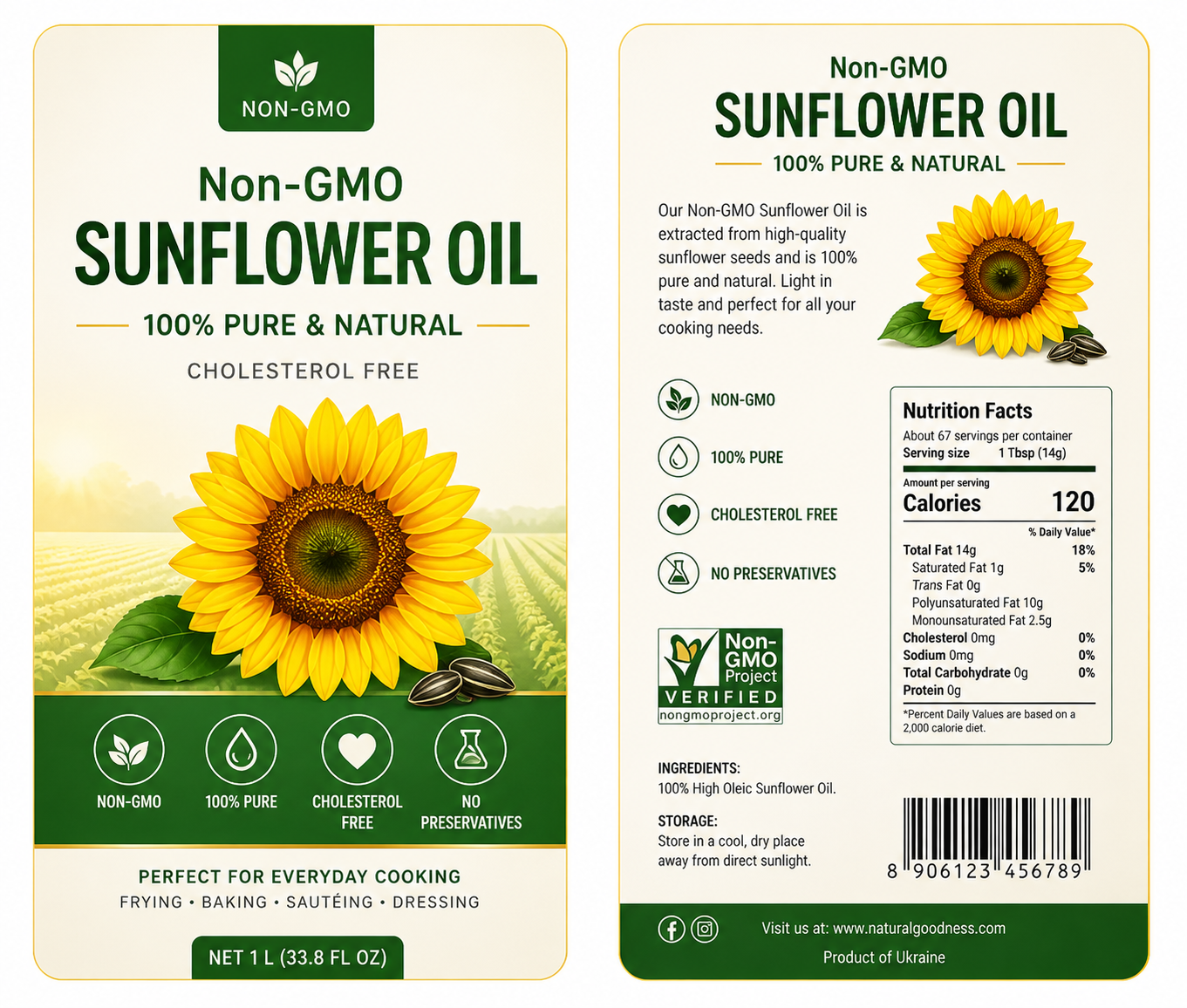
Approve the exact product, producer, batch and supporting documents before using a non-GMO statement.
Target B2B Buyers
Documented sunflower oil supply for ingredient, retail and foodservice procurement
Different buyers require different specifications, evidence, packaging and claim approval.
Food Manufacturers
Need ingredient specifications, declarations, traceability and batch evidence for finished products.
Importers
Need origin, product evidence, destination rules, Incoterm and shipment-document consistency.
Supermarkets
Need defensible product claims, compliant labels, barcodes, cartons and retail-ready supply.
Ingredient Distributors
Need transferable product files and consistent specifications for downstream customers.
Private-Label Brands
Need claim approval connected to the oil, producer, packing facility and finished label.
Bakery & Snack Producers
Need reliable frying, baking or formulation inputs with documented sourcing.
Foodservice Suppliers
Need practical commercial formats, repeat supply and customer-facing product information.
Procurement Teams
Need legal seller, producer, evidence, testing, packaging, price and claims verification.
Non-GMO Evidence Framework
Build a claim file that connects raw material, production, batch and shipment
The evidence package should be agreed before purchase. It may be documentary, analytical or a combination of both, depending on buyer and market requirements.
One claim, several evidence layers
A laboratory result alone may not explain sourcing and segregation, while a declaration alone may not satisfy every buyer. The quotation should identify the exact evidence package.
Producer Declaration
Identify the legal producer, facility, product and declaration period.
Raw-Material Statement
Describe the sunflower seed or raw-oil sourcing basis applicable to the supply.
Traceability Records
Connect supplier, intake, production, storage, batch, packing or loading and shipment.
Segregation Controls
Explain how material identity is maintained during storage, processing and handling.
Laboratory Testing
Define the sample, method, event scope, threshold, laboratory and reporting basis.
Certificate or Scheme Evidence
Use only current documents whose holder, facility, product and scope match the order.
Batch Certificate of Analysis
Link product quality and any agreed GMO-related result to the proposed lot.
Buyer Claim Approval
Confirm whether the evidence supports ingredient files, labels or customer specifications.
Sunflower Oil Product Options
Confirm non-GMO evidence separately for each product and facility
Refined, crude and high-oleic oils have different specifications, applications and evidence needs. Availability is reviewed against the actual supply.
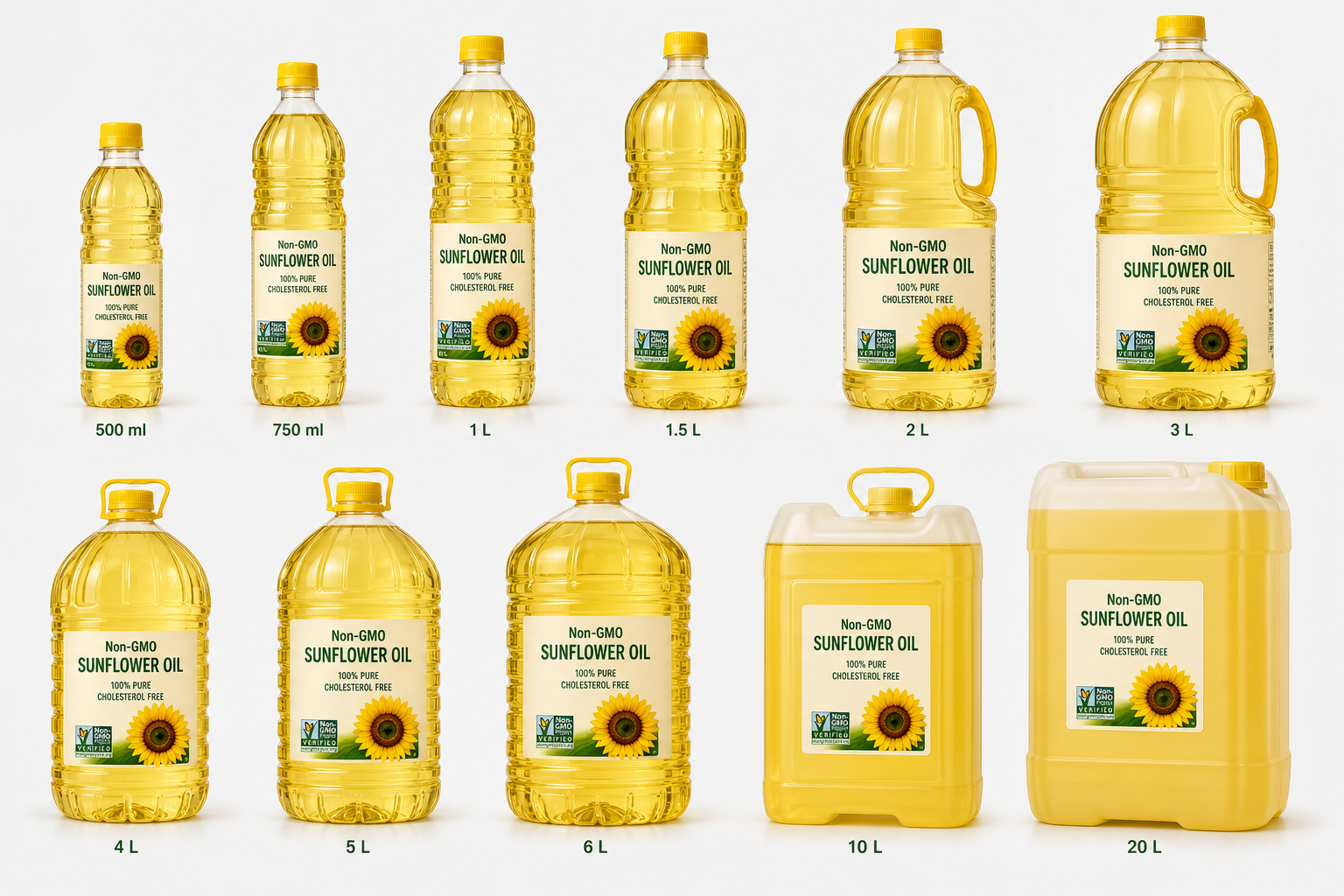
Refined Sunflower Oil
For food manufacturing, retail, foodservice and private-label applications, subject to documented status.
Review refined sunflower oil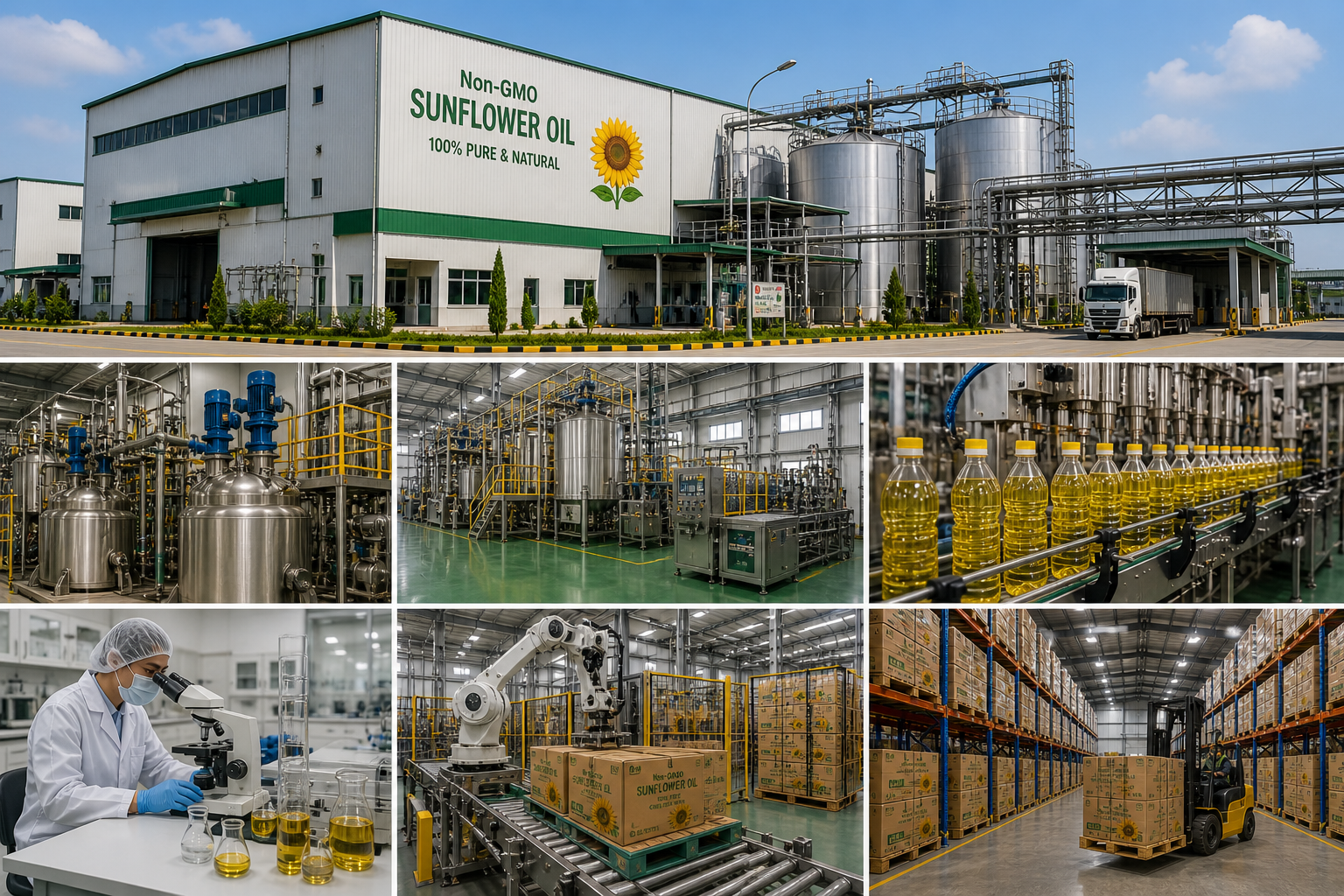
Crude Sunflower Oil
For qualified refineries and processors that approve both refinery parameters and claim evidence.
Review crude sunflower oil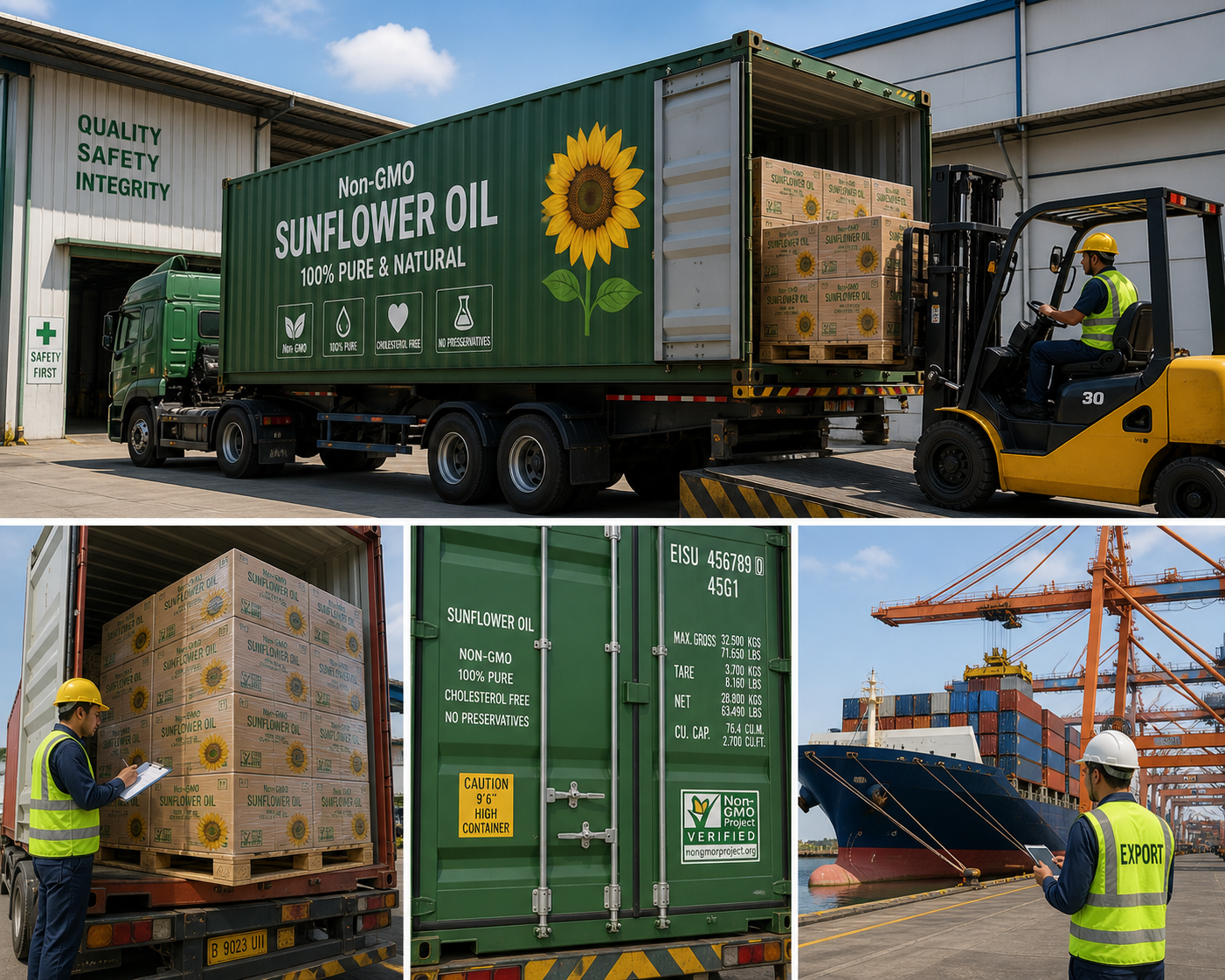
High-Oleic Sunflower Oil
For frying and manufacturing applications requiring verified high-oleic identity and sourcing evidence.
Review high-oleic sunflower oilFood Manufacturing Applications
Non-GMO sunflower oil for ingredient declarations and commercial production
The oil specification and evidence should be matched to the finished product, process conditions and customer claims.
Bakery Products
Ingredient supply for bread, pastries, fillings and prepared bakery products.
Snacks & Frying
Standard or high-oleic oil selected according to process and product requirements.
Sauces & Dressings
Oil identity, sensory profile and declaration requirements reviewed for formulations.
Prepared Foods
Ingredient documentation for ready meals, fillings and manufactured food products.
Retail Cooking Oil
Bottled or private-label products with destination-approved claims and labels.
Foodservice
Commercial formats for kitchens, caterers and hospitality supply chains.
Ingredient Distribution
Transferable specifications and evidence for downstream manufacturing customers.
Private-Label Products
Claim, artwork, producer and packing-facility approval before commercial launch.
Product & Claim Specification
Approve the oil specification and the non-GMO evidence as separate requirements
Product quality and GMO-related status are related procurement topics but should not be treated as the same test or document.
Two approval files protect the buyer
One file defines the oil’s technical quality. The second defines how the non-GMO claim is supported. Both must match the product and batch.
Oil Type & Processing
Confirm refined, crude, high-oleic or other product status and intended use.
Quality Parameters
Approve acidity, peroxide value, moisture, impurities, identity and other limits.
Origin & Producer
Identify Ukraine origin, legal producer, facility and supply relationship.
Non-GMO Definition
State the buyer’s required wording, threshold, scheme or customer specification.
Testing Scope
Define whether testing is required and which sample, method, laboratory and result apply.
Traceability & Segregation
Agree records linking raw material, production, storage, batch and shipment.
Shelf Life & Storage
Confirm the applicable period and conditions for the exact product and package.
Label & Customer Claims
Approve the wording only after the buyer confirms evidence and market requirements.
Packaging & Export Formats
Select packaging without breaking product identity and traceability
The selected packing or loading facility should maintain the approved product and batch identity through filling, storage and shipment.
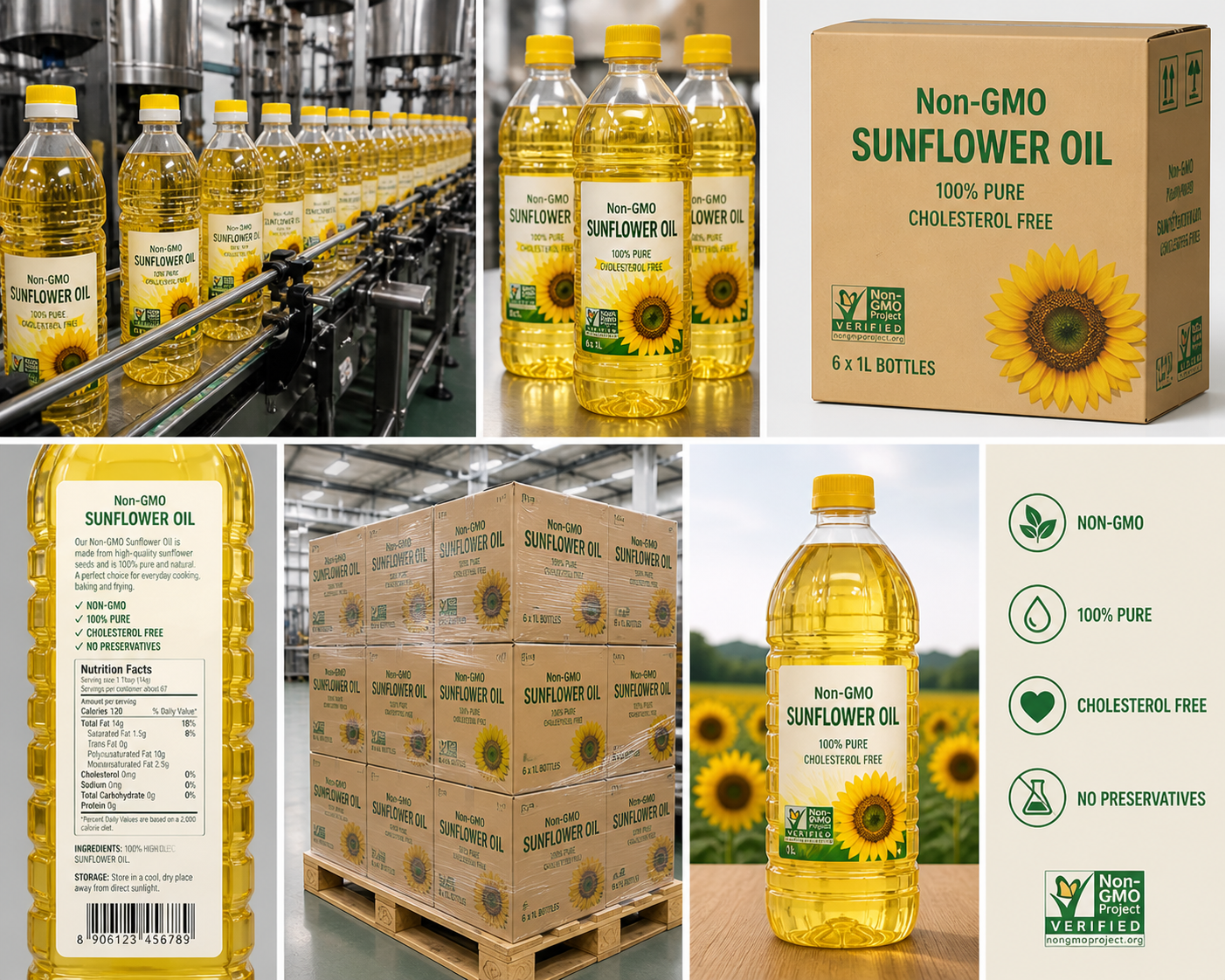
Bottled Supply
Product, producer, packing facility, label claim and lot coding must remain connected.
Drums & IBCs
Confirm food-contact suitability, cleanliness, seals, quantity and batch identification.
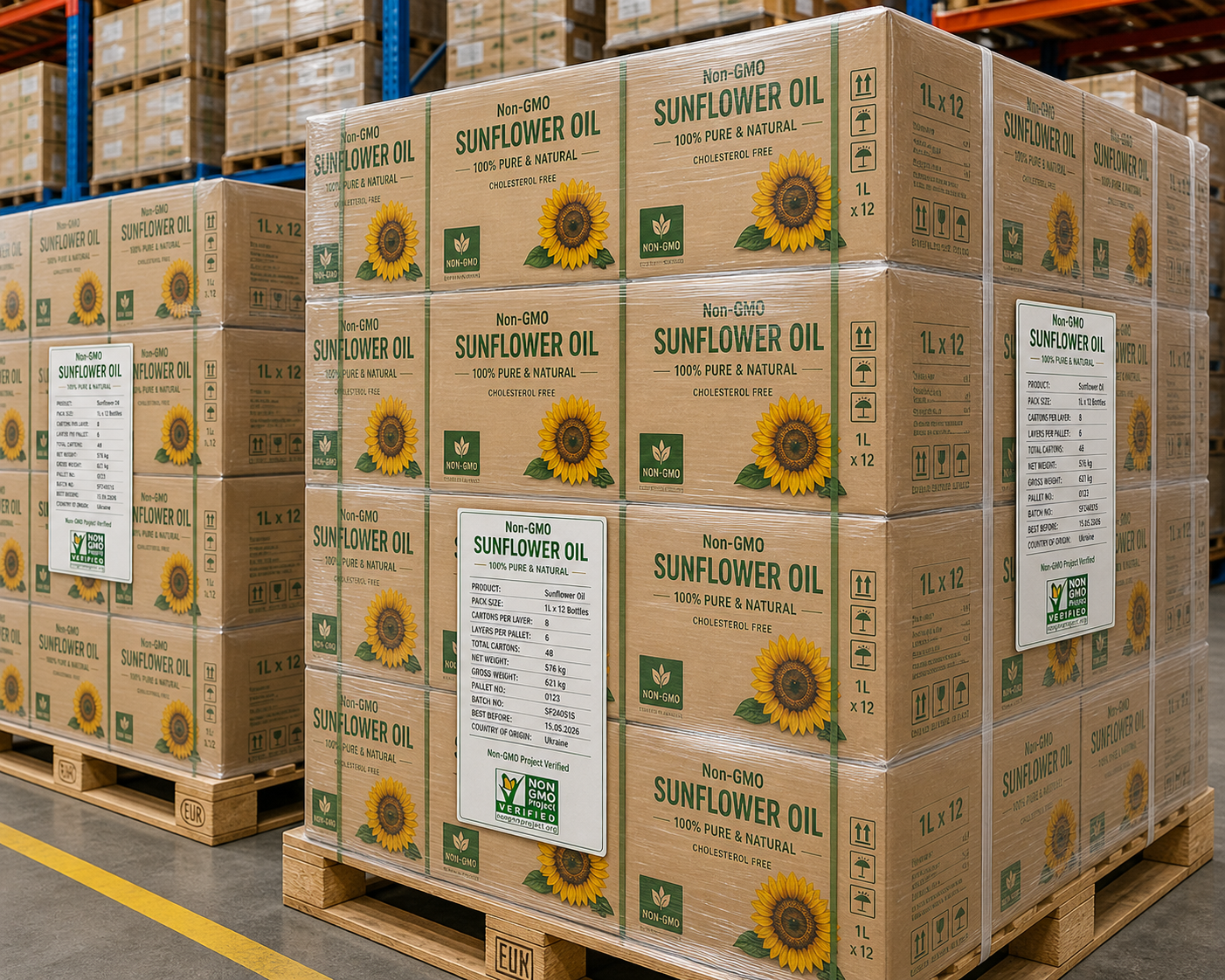
Cartons & Pallets
Connect lot codes, case labels, pallet identity and shipment documents.
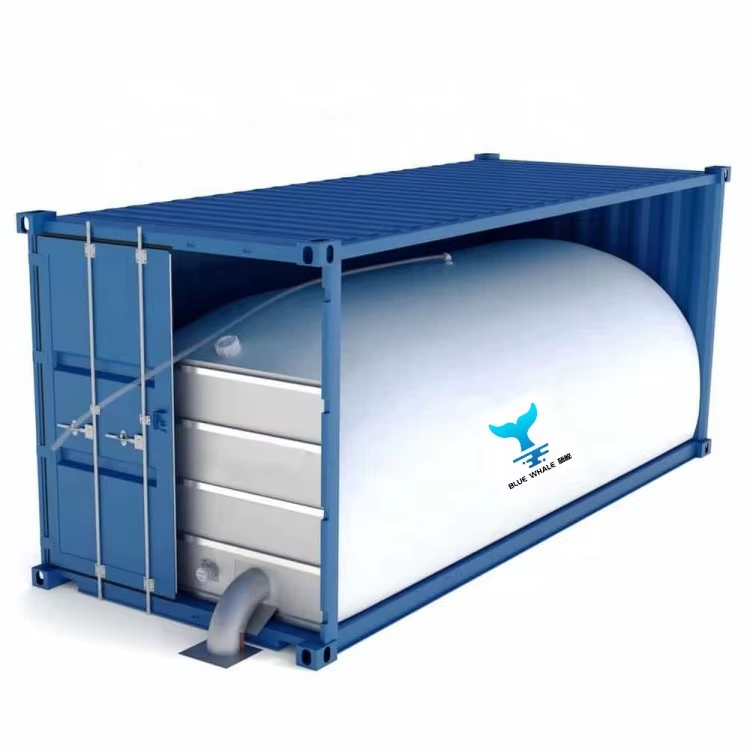
Flexitank Loading
Review tank identity, liner, segregation, sample, seals, route and discharge capability.
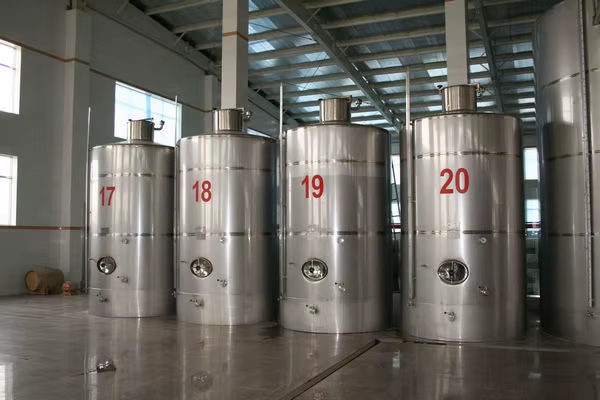
ISO Tank or Road Tanker
Confirm previous cargo, cleaning, product identity, sample, seals and receiving infrastructure.
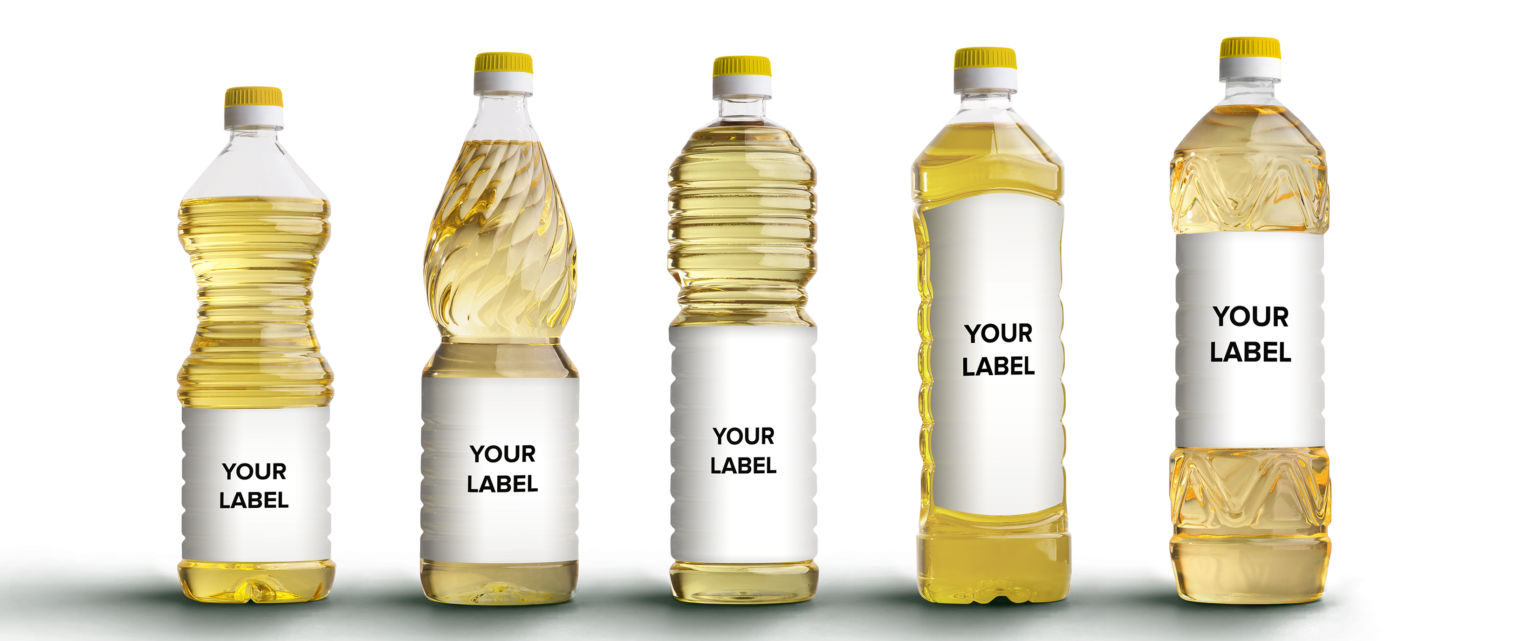
Private-Label Supply
Claim wording, artwork, evidence, packing facility and destination approval require a separate program.
Quotation & Evidence-Control Workflow
From buyer definition to documented sunflower oil shipment
The process confirms what “non-GMO” means for the buyer before the claim is used commercially.
Define the Requirement
Provide product, use, market, quantity, packaging and required non-GMO wording or standard.
Review Product & Facility
Confirm oil availability, producer, facility, sourcing basis and packaging route.
Agree the Evidence File
Define declarations, traceability, segregation, certification and testing requirements.
Approve Specifications
Approve oil parameters, claim definition, methods, shelf life and packaging.
Written Quotation
The offer states product, evidence, price, validity, MOQ, lead time, Incoterm and exclusions.
Commercial Approval
Confirm payment, testing, inspection, labels, claims and non-conformity procedures.
Batch & Loading Control
Connect the approved lot, documents, sample, packaging or tank and shipment references.
Documented Dispatch
Reconcile product, quantity, evidence, invoice, origin and transport documents.
Quality, Traceability & Shipment Documents
Verify the product claim and technical quality independently
A non-GMO file does not replace the oil specification, and a general quality certificate does not prove the non-GMO status of a specific lot.
Approved Product Specification
Define oil identity, parameters, intended use, shelf life and storage conditions.
Non-GMO Evidence File
Define declarations, traceability, segregation and testing required by the buyer.
Batch Certificate of Analysis
Connect quality results and any agreed GMO-related result to the actual lot.
Current Facility Evidence
Verify legal producer, facility, activity, product scope and document validity.
Sampling & Laboratory
Agree who samples, sample identity, custody, method, laboratory and retained sample.
Packaging or Tank Identity
Maintain product and batch identity through filling, storage, loading and sealing.
Traceability File
Link supplier, producer, batch, packing or loading and shipment references.
Shipment Documents
Align invoice, packing list, origin, COA, declarations and transport documents.
MOQ & Non-GMO Sunflower Oil Pricing
Documented sunflower oil programs from 10 metric tonnes
Final pricing depends on product, evidence requirements, testing, quantity, packaging, destination and Incoterm. The displayed figure is an indicative starting point.
Product & Quality
Refined, crude and high-oleic products have different specifications and market values.
Evidence & Testing
Declarations, certifications, sampling and laboratory analysis may affect cost and lead time.
Packaging & Quantity
Bottles, drums, IBCs, flexitanks, tankers, cartons and pallets affect unit economics.
Destination & Incoterm
Freight, insurance, customs, duties and inland delivery depend on the route.
Current Company Registration Details
Verify the legal seller and the producer supporting the claim
The legal company on the quotation, contract, invoice and bank beneficiary should be verified separately from the producer and facility supporting the non-GMO evidence.
Transparent commercial and evidence structure
Inter Oliya is a registered Ukraine-based supply and trade company. The actual producer, refinery, packing or loading facility is confirmed per order. The page does not claim that every facility or image is owned by Inter Oliya.
Before payment, buyers should request a current registry extract, verify the authorized representative and payment beneficiary, and review the producer and evidence documents supporting the quoted non-GMO product.
Non-GMO Buyer Checklist
What to confirm before approving a non-GMO sunflower oil order
The final contract should convert the claim into clear evidence, responsibilities and remedies.
Exact Claim Definition
State the buyer standard, wording, threshold, scheme or customer requirement.
Legal Seller & Producer
Verify both entities and their relationship to the proposed product.
Product & Facility
Confirm oil type, producer, facility, batch, storage and intended use.
Evidence Package
Approve declarations, traceability, segregation, certification and testing.
Testing Method & Sample
Define sample identity, custody, laboratory, method, threshold and reporting.
Label & Market Approval
Confirm that the voluntary claim is accurate and accepted in the destination market.
Price, Lead Time & Incoterm
Separate oil, evidence, testing, packaging, freight and destination costs.
Non-Conformity & Claims
Agree retesting, independent analysis, rejection, replacement and compensation procedures.
Non-GMO Sunflower Oil FAQ
Questions from manufacturers, importers and ingredient buyers
These answers describe the general supply framework. The buyer specification, evidence file, quotation and contract govern the actual order.
What is non-GMO sunflower oil?
It is sunflower oil supplied against a defined non-GMO requirement supported by agreed sourcing, traceability, declarations, segregation or testing evidence.
Is all sunflower oil automatically non-GMO?
This page does not make a universal claim. Buyers should require evidence for the exact product, producer, facility and batch proposed for purchase.
Which evidence can support a non-GMO claim?
Evidence may include producer declarations, raw-material statements, traceability, segregation records, current scheme documents and agreed laboratory testing.
Is laboratory testing always required?
Not every buyer uses the same approach. The quotation should state whether testing is required and define the sample, method, laboratory, threshold and reporting basis.
Which sunflower oil products may be reviewed?
Refined, crude and high-oleic sunflower oil may be reviewed, subject to availability and separate confirmation of the product specification and non-GMO evidence.
What is the minimum order quantity?
The minimum commercial order is 10 metric tonnes. Practical quantities may differ by product, packaging, facility and testing requirements.
What is the indicative starting price?
Indicative pricing starts from €910 per metric tonne for eligible configurations. Final pricing depends on product, evidence, testing, quantity, packaging, destination and Incoterm.
Can the oil be supplied in bottles or bulk formats?
Potential formats include bottles, drums, IBCs, flexitanks and tanker supply. Product identity, traceability and claim evidence must remain connected through packing or loading.
Can a private-label product use a non-GMO statement?
Only after the buyer confirms the evidence, claim wording, producer, packing facility and destination-market requirements. A label claim should not be assumed from a product page.
What information is required for an accurate quotation?
Provide the company, destination, product, intended use, quantity, packaging, non-GMO definition, evidence or testing needs, Incoterm and target date.
Documented Sunflower Oil Export Supply
Request a quotation built around your non-GMO specification and evidence needs
Send the product, intended use, quantity, packaging, destination, claim definition, testing requirements and Incoterm for a documented supply review.