
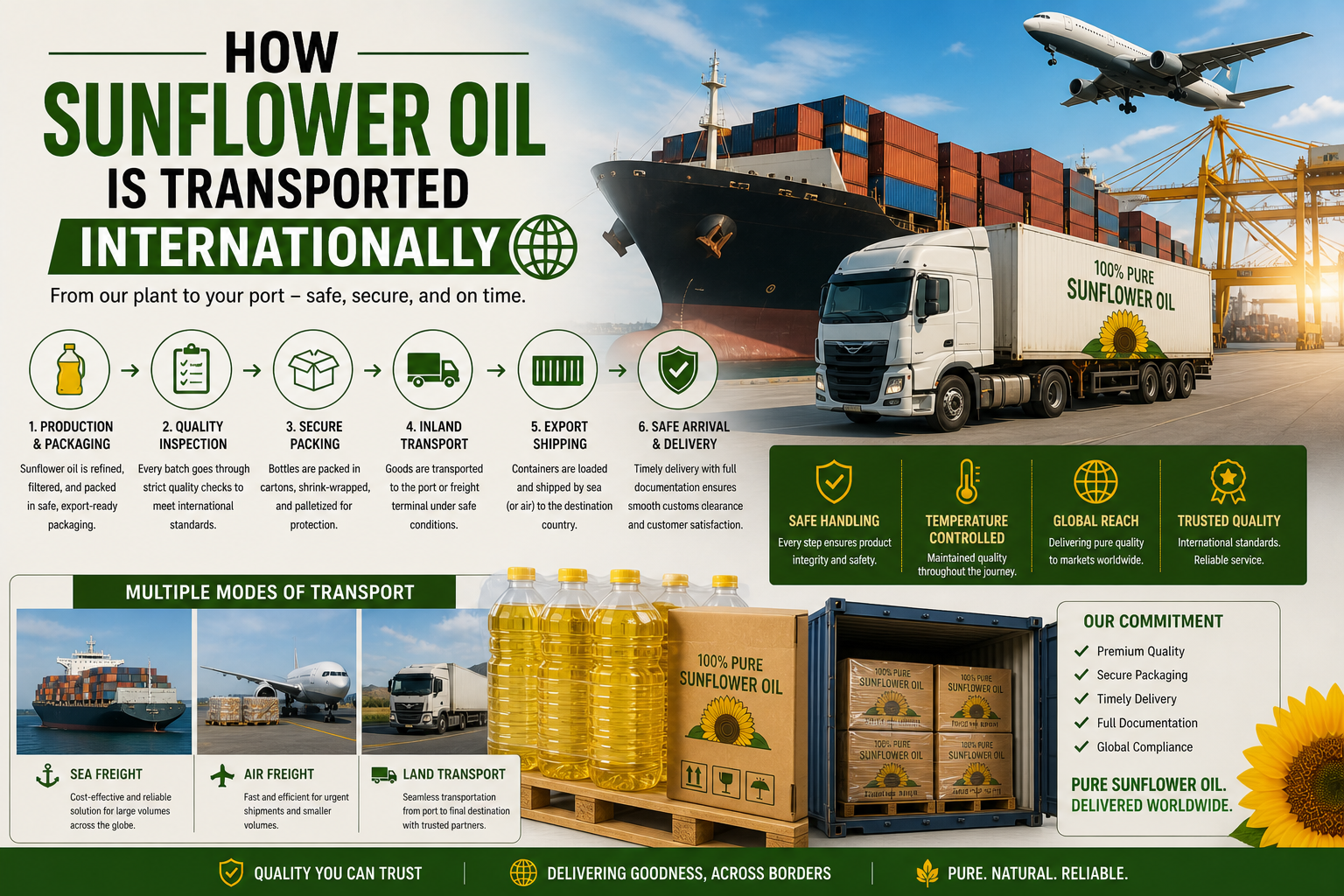
How Sunflower Oil Is Transported Internationally
International transportation of sunflower oil is a structured process that combines logistics planning, packaging, storage, documentation, and shipping coordination. Whether shipped in bulk or packaged form, sunflower oil must be handled carefully to maintain quality and ensure safe delivery across long distances.
For importers, distributors, food manufacturers, and private label brands, understanding how sunflower oil is transported internationally helps improve sourcing decisions, reduce risk, and ensure reliable supply.
At Inter Oliya’s export logistics, transportation is integrated with production, packaging, and compliance systems to support global shipments.
Main Methods of Transporting Sunflower Oil
Sunflower oil is transported internationally using several methods depending on shipment size, urgency, destination, and buyer requirements.
1. Sea Freight (Most Common Method)
Sea freight is the most widely used method for transporting sunflower oil internationally. It is cost-effective for large volumes and suitable for long-distance shipments.
Bulk sunflower oil is often transported using:
- Flexitanks inside standard containers
- ISO tank containers
- Drums and IBC tanks
According to global logistics providers such as Maersk, ocean freight remains the most efficient solution for bulk liquid cargo.
This method is commonly used for bulk sunflower oil supply to international markets.
2. Road Freight (Regional Transport)
Road transport is typically used for regional deliveries or inland transport to ports. It is also used for cross-border shipments within regions such as Europe.
Packaged sunflower oil, including bottled products and palletized goods, is often transported using trucks.
3. Rail Freight
Rail transport is used in certain regions for moving bulk sunflower oil over long distances inland. It is often used in combination with sea freight for intermodal logistics solutions.
4. Air Freight (Limited Use)
Air freight is rarely used for sunflower oil due to cost. However, it may be used for urgent shipments, samples, or small high-value orders.
Bulk Transport of Sunflower Oil
Bulk transport is used for large-scale shipments to refineries, food manufacturers, and industrial buyers. This method focuses on efficiency and cost optimization.
Bulk transport systems include:
- Flexitanks: cost-effective for large volumes inside standard containers
- ISO tanks: specialized containers designed for liquid transport
- Drums and IBC tanks: used for medium-scale shipments
These methods are commonly used for transporting refined sunflower oil and crude oil in large quantities.
Transport of Packaged Sunflower Oil
Packaged sunflower oil, including bottled and private label products, is transported in cartons and pallets. These shipments are designed for retail distribution and foodservice use.
Key considerations include:
- Secure palletization
- Protection against damage during handling
- Efficient container loading
- Compliance with labeling requirements
Businesses can review packaging solutions and packaging types to understand how packaging affects transportation.
Temperature and Environmental Control During Transport
Sunflower oil must be protected from extreme temperatures, light exposure, and contamination during transport.
- High temperatures can accelerate oxidation
- Low temperatures may cause cloudiness if not properly refined
- Exposure to air can reduce shelf life
Proper storage before shipment, as explained in sunflower oil storage systems, is essential to maintain quality during transport.
Loading and Container Handling
Proper loading is essential for safe transportation. Containers must be clean, dry, and suitable for food-grade products.
Loading procedures include:
- Inspection of containers before loading
- Proper sealing to prevent contamination
- Weight distribution to avoid damage
- Securing cargo to prevent movement
Bulk shipments may require tank cleaning certificates or inspection reports to ensure product safety.
Documentation and Transport Coordination
Transporting sunflower oil internationally requires accurate documentation to support customs clearance and logistics coordination.
Key documents include:
- Commercial invoice
- Packing list
- Bill of lading or sea waybill
- Certificate of origin
- Certificate of analysis
Buyers can review export compliance and export documentation requirements for more details.
Role of Incoterms in Transportation
Incoterms define responsibilities between buyers and sellers in international shipments. They determine who handles transport, insurance, and delivery.
The official rules are published by the International Chamber of Commerce (ICC).
Common terms in sunflower oil trade include:
- FOB: seller delivers goods to the port of shipment
- CIF: seller arranges cost, insurance, and freight
- DAP: seller delivers to destination, buyer handles import
- DDP: seller manages most delivery responsibilities
Buyers can explore delivery terms to understand how these apply to their shipments.
Transport Risks and How They Are Managed
International transport involves certain risks, including delays, damage, contamination, and temperature-related issues.
Risk management includes:
- Proper packaging and sealing
- Use of suitable transport containers
- Cargo insurance coverage
- Reliable logistics partners
- Accurate documentation
These measures help ensure that sunflower oil arrives in good condition.
Why Transportation Matters for International Buyers
Transportation is not just a logistics step. It directly affects product quality, delivery timelines, and overall supply reliability.
Buyers sourcing sunflower oil for wholesale, manufacturing, or retail must ensure that suppliers have strong logistics systems in place.
This is particularly important for:
- Food manufacturers
- Supermarkets
- Wholesale distributors
- Private label brands
- Import/export companies
Reliable transportation systems support consistent supply and long-term business relationships.
Conclusion
Sunflower oil is transported internationally through a combination of sea freight, road transport, rail logistics, and specialized packaging systems. Bulk shipments and packaged products require different handling approaches, but both depend on proper storage, documentation, and logistics coordination.
Understanding how sunflower oil is transported helps buyers make informed sourcing decisions and reduce risks in international trade.
If your business requires reliable sunflower oil supply with integrated logistics support, you can explore export logistics or submit a request through the request quote page.
Frequently Asked Questions
What is the most common way to transport sunflower oil internationally?
Sea freight is the most common method, especially for bulk shipments using flexitanks or ISO tanks.
Can sunflower oil be transported in bulk?
Yes, it is commonly transported in bulk using flexitanks, ISO tanks, and drums.
How is packaged sunflower oil transported?
Packaged oil is transported in cartons and pallets, usually via container shipping or road transport.
Does temperature affect sunflower oil during transport?
Yes, temperature changes can affect oil stability, so controlled conditions are important.
What documents are required for transporting sunflower oil?
Documents include a commercial invoice, packing list, bill of lading, certificate of origin, and certificate of analysis.