
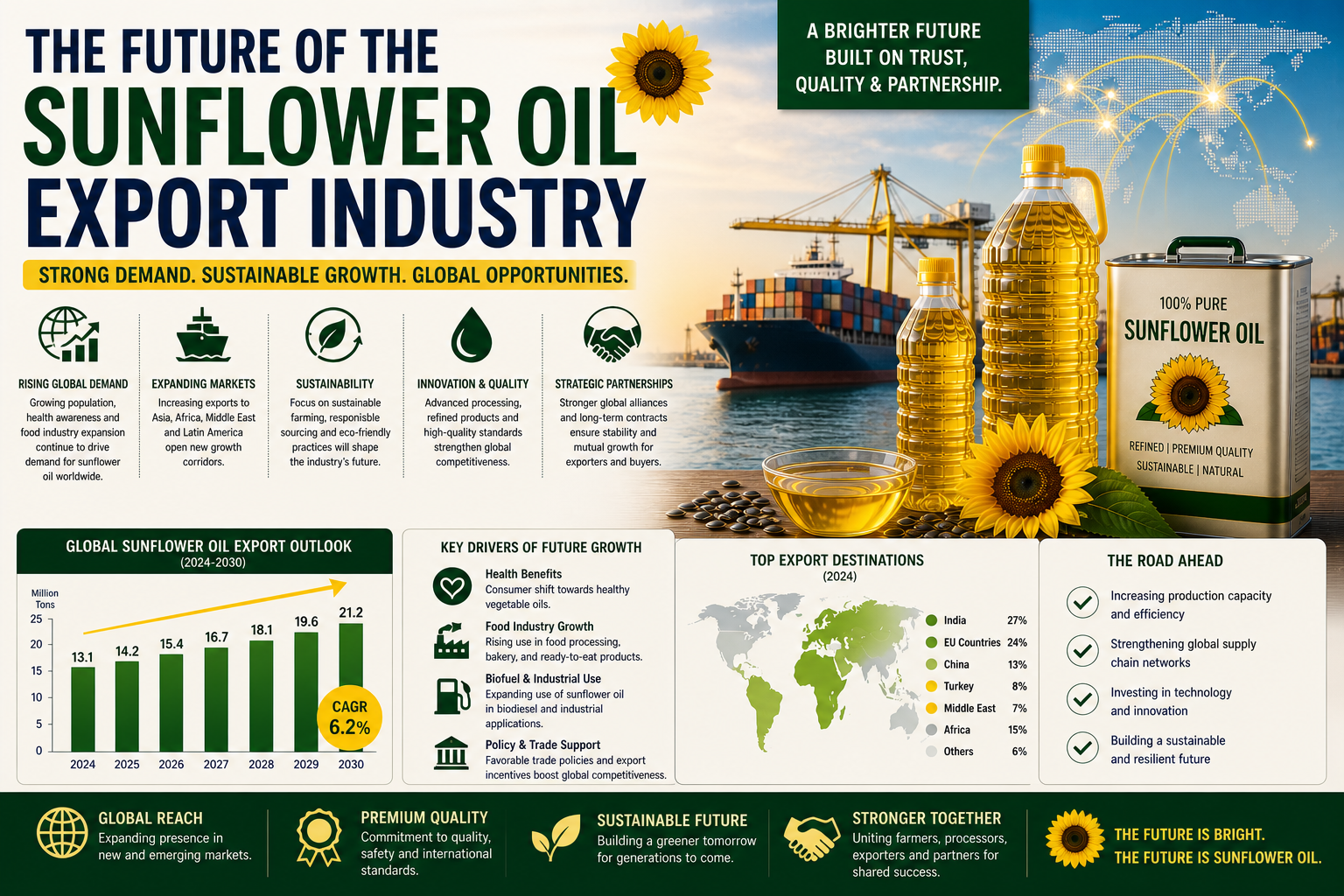
Future of the Sunflower Oil Export Industry
The future of the sunflower oil export industry is being shaped by global demand, agricultural production, logistics routes, food manufacturing growth, private label expansion, and changing buyer expectations. For importers, wholesalers, distributors, supermarkets, and food manufacturers, understanding these trends is essential for long-term sourcing decisions.
Sunflower oil remains a major edible oil in international trade because it is widely used for cooking, frying, food manufacturing, bottled retail products, and private label brands. Inter Oliya supports global buyers with bulk sunflower oil supply, packaging options, documentation support, and export coordination.
Why the Sunflower Oil Export Industry Will Remain Important
Sunflower oil export will remain important because many countries depend on imported edible oils to meet household, retail, foodservice, and manufacturing demand. Population growth, urbanization, packaged food consumption, and supermarket expansion continue to support international demand.
FAO reported that vegetable oil prices increased in early 2026, showing continued strength in global oilseed and vegetable oil markets. FAO Oilcrops Price Indices.
Buyers planning bulk sourcing can review our bulk sunflower oil supplier page.
Key Trends Shaping the Future of Sunflower Oil Exports
1. Strong Demand from Food Manufacturers
Food manufacturers will continue to drive demand for sunflower oil because it is used in processed foods, frying, bakery products, sauces, snacks, and prepared meals. This creates consistent demand for refined sunflower oil and bulk supply.
Buyers in food production can explore our refined sunflower oil page and our guide on food grade sunflower oil.
2. Growth of Private Label Cooking Oil Brands
Private label cooking oil is expected to remain an important growth area. Supermarkets, distributors, and food brands are increasingly building their own sunflower oil brands to improve margins, control packaging, and strengthen customer loyalty.
This trend increases demand for custom labels, bottle sizes, cartons, pallets, and export-ready packaging. Relevant pages include private label sunflower oil, bottled sunflower oil, and packaging solutions.
3. Ukraine’s Continued Role in Global Supply
Ukraine will remain a major country in the sunflower oil export industry because of its agricultural base, processing capacity, and long-standing role in international edible oil trade.
USDA Foreign Agricultural Service data lists Ukraine among the top sunflowerseed oil producers, with Ukraine representing a major share of global production. USDA FAS Sunflowerseed Oil Production Data.
Buyers can read more in our articles on sunflower oil export from Ukraine and how Ukraine impacts the global sunflower oil market.
4. Greater Focus on Logistics Resilience
Export logistics will remain one of the most important factors in the future of sunflower oil trade. Buyers will continue to evaluate transport routes, freight costs, container availability, port access, road delivery, and delivery terms before confirming supply.
The International Chamber of Commerce explains that Incoterms rules define seller and buyer responsibilities in international trade. ICC Incoterms Rules.
Inter Oliya provides more information through export logistics, shipping methods, and delivery terms.
5. Higher Buyer Expectations for Certification and Compliance
Future buyers will continue to expect clear documentation, traceability, product specifications, and food safety systems. This is especially important for European importers, supermarkets, food manufacturers, and private label buyers.
Buyers can review Inter Oliya’s pages on certifications, ISO standards, HACCP certification, Halal certification, and export compliance.
Future Export Opportunities by Buyer Segment
Importers and Wholesalers
Importers and wholesalers will continue to require stable bulk sunflower oil supply, reliable logistics, competitive pricing, and clear documentation. They will also need flexible delivery planning as global freight and supply conditions change.
Useful resources include our bulk sunflower oil buying guide and how to buy sunflower oil in bulk for Europe.
Food Manufacturers
Food manufacturers will remain steady buyers of refined sunflower oil due to its use in food production. Their main priorities will be consistent quality, predictable lead times, and supply continuity.
Retailers and Private Label Brands
Retail and private label buyers will need export-ready bottled products, custom branding, carton packaging, pallet loading, and documentation suitable for destination markets.
Businesses planning their own brand can read our private label sunflower oil guide.
European Markets in the Future Export Landscape
Europe will remain one of the most important regions for sunflower oil exports. Demand is supported by food manufacturing, retail distribution, wholesale trading, and private label development.
Buyers can explore country-specific pages for Germany, France, Netherlands, Belgium, Spain, Italy, and Poland.
Challenges the Industry Must Manage
The sunflower oil export industry will continue to face challenges that buyers and suppliers must manage carefully.
- Price volatility in vegetable oil markets
- Export route and freight disruption
- Packaging and storage requirements
- Food safety and import compliance
- Buyer demand for traceability and documentation
- Competition from other vegetable oils
- Long-term supplier reliability
For more detail, read our article on sunflower oil supply chain challenges in Europe.
How Buyers Should Prepare for the Future
Build Long-Term Supplier Relationships
Buyers should work with exporters that understand product quality, packaging, documentation, logistics, and communication. Reliable relationships help reduce risk in volatile markets.
Plan Orders Earlier
Early order planning gives buyers more time to confirm availability, packaging format, delivery terms, and export documentation.
Choose the Right Product Format
Buyers should choose between crude oil, refined oil, bottled oil, organic sunflower oil, high oleic sunflower oil, halal-certified sunflower oil, and private label options depending on the target market.
Explore available categories on our sunflower oil products page.
Conclusion
The future of the sunflower oil export industry will be shaped by growing food demand, private label expansion, Ukraine’s role in global supply, logistics resilience, price movement, and higher buyer expectations for documentation and compliance.
Inter Oliya supports importers, wholesalers, food manufacturers, distributors, supermarkets, and private label brands with sunflower oil supply and export coordination. To begin sourcing, visit our request quote page or explore our product range.
Frequently Asked Questions
What is the future of the sunflower oil export industry?
The future is expected to be shaped by growing food demand, private label growth, logistics resilience, Ukraine supply, pricing trends, and stronger buyer requirements for documentation.
Will global demand for sunflower oil continue to grow?
Demand is expected to remain strong because sunflower oil is widely used in food manufacturing, retail cooking oil, foodservice, and private label products.
Why is Ukraine important for sunflower oil exports?
Ukraine remains one of the world’s key sunflower oil producing and exporting countries, making it important for global supply and pricing.
What should buyers consider before importing sunflower oil?
Buyers should confirm product type, quantity, packaging, delivery terms, documentation, certification requirements, and destination market needs.
Where can buyers request sunflower oil export pricing?
Buyers can submit product, quantity, packaging, and destination details through the Inter Oliya request quote page.