
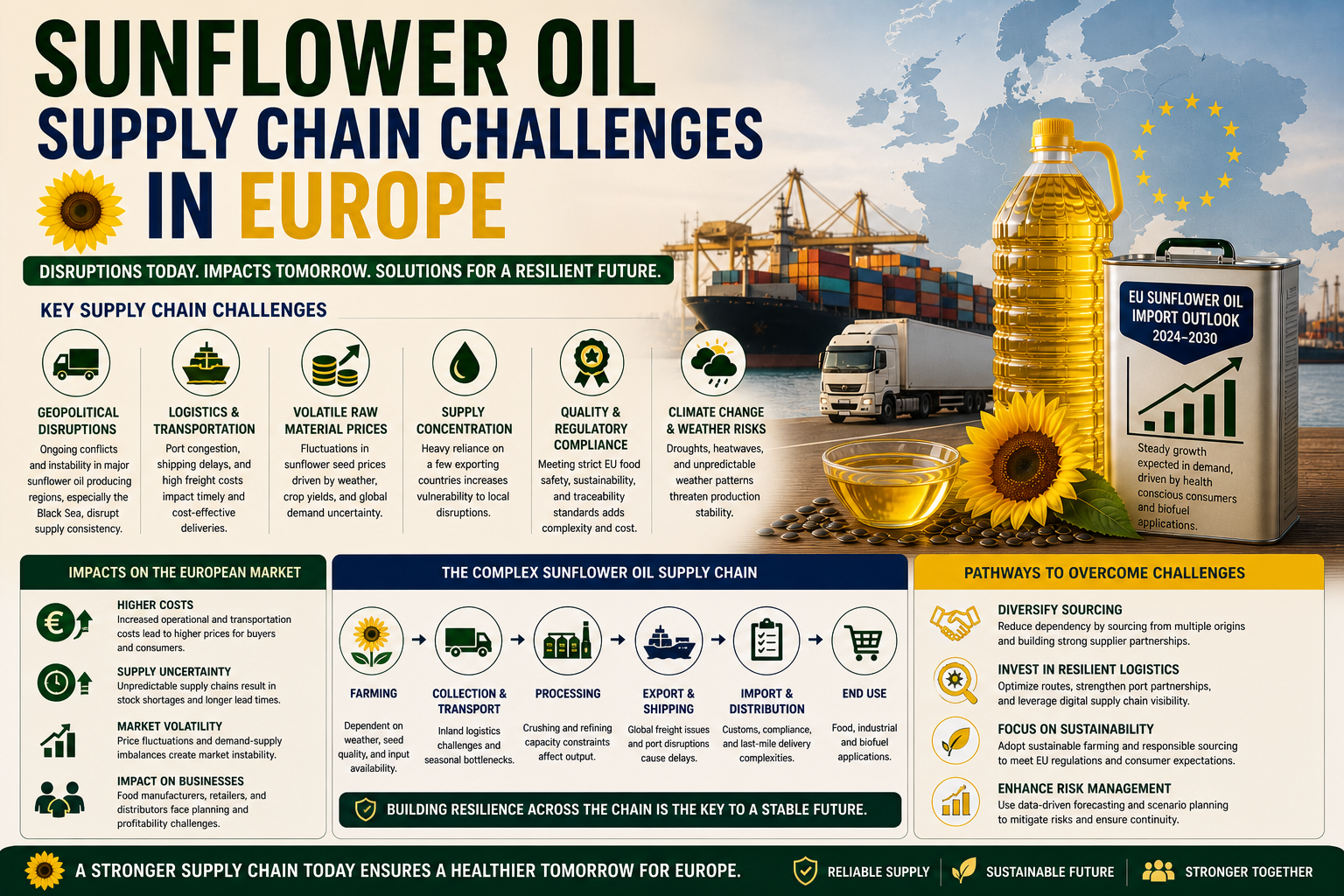
Sunflower Oil Supply Chain Challenges in Europe
Sunflower oil supply chain challenges in Europe affect importers, wholesalers, food manufacturers, distributors, supermarkets, and private label brands. Buyers need reliable supply, consistent quality, proper documentation, and efficient logistics to keep procurement stable.
Europe depends on both domestic edible oil production and imported sunflower oil. Because sunflower oil is used across food manufacturing, retail, foodservice, and wholesale distribution, supply chain disruption can affect pricing, availability, delivery timelines, and buyer confidence.
Inter Oliya supports European and international buyers with structured sunflower oil supply, export coordination, packaging solutions, and documentation support.
Why Sunflower Oil Supply Chains Matter in Europe
Sunflower oil is a critical ingredient for cooking, frying, food production, bottled retail products, and private label brands. When the supply chain is stable, buyers can plan orders more confidently. When logistics, pricing, or documentation becomes uncertain, buyers may face delays and higher landed costs.
The European Commission states that the EU applies strict import rules for food and feed hygiene, consumer safety, and animal health status so imported products meet required standards.
Buyers planning commercial orders can review our bulk sunflower oil supplier page.
Main Sunflower Oil Supply Chain Challenges in Europe
1. Price Volatility in Vegetable Oil Markets
Vegetable oil prices can change quickly due to crop output, global demand, energy prices, freight costs, and export availability. Sunflower oil buyers must monitor price movement before confirming large-volume orders.
FAO reported that the Vegetable Oil Price Index rose for a third consecutive month in March 2026, driven by higher quotations across palm, soy, sunflower, and rapeseed oils. FAO Oilcrops Price Indices.
Buyers can read our sunflower oil price forecast for more procurement insight.
2. Export Route and Freight Disruptions
European sunflower oil supply depends heavily on transport routes, container availability, port handling, road freight, and cross-border movement. Any disruption in export routes can affect delivery schedules and final buyer cost.
The Council of the European Union notes that EU solidarity lanes remain important for Ukraine’s trade, while a large share of grain, oilseed, and related product exports also moves through the Black Sea. Council of the European Union.
Buyers can review our export logistics, shipping methods, and delivery terms pages.
3. Packaging and Handling Requirements
Packaging is a major part of sunflower oil supply chain planning. Buyers may require bottled sunflower oil, cartons, pallets, drums, IBC tanks, flexitanks, or private label packaging. Each format affects handling, storage, transport cost, and delivery timing.
Retail and distributor buyers can explore bottled sunflower oil, private label sunflower oil, and packaging solutions.
4. Food Safety and Import Compliance
European buyers need clear documentation and compliance support. Importers must consider food safety standards, product specifications, customs documentation, certificates, traceability, and border checks.
The European Commission explains that the EU applies a comprehensive and risk-based system of official controls for food and feed imports to ensure safety, quality, and traceability standards. European Commission Food Safety.
Relevant Inter Oliya pages include export compliance, certifications, ISO standards, and HACCP certification.
5. Supplier Reliability and Order Planning
One of the biggest challenges for buyers is choosing a supplier that can manage volume, quality, packaging, documentation, and shipment coordination. A low price does not help if the supplier cannot deliver consistently.
Buyers should read our guides on how to choose a reliable sunflower oil supplier and how to verify a sunflower oil exporter.
How Supply Chain Challenges Affect Different Buyers
Importers and Wholesalers
Importers and wholesalers are directly affected by freight costs, customs requirements, delivery schedules, and supply availability. They need stable access to bulk sunflower oil and clear delivery terms.
Useful pages include how to buy sunflower oil in bulk for Europe and bulk sunflower oil buying guide.
Food Manufacturers
Food manufacturers need consistent quality and regular supply because sunflower oil is often used in production schedules. Delays can affect manufacturing output, pricing, and customer commitments.
Food production buyers can review refined sunflower oil and food grade sunflower oil explained.
Supermarkets and Private Label Brands
Retail buyers need stable bottle supply, label consistency, carton packaging, pallet planning, and delivery reliability. Supply chain problems can affect shelf availability and brand reputation.
Private label buyers can review private label sunflower oil and the growth of private label cooking oil brands.
Country-Specific Supply Chain Considerations
European buyers face different logistics and distribution conditions depending on destination country. Germany, France, Netherlands, Belgium, Spain, Italy, and Poland all have active demand but different route planning and buyer requirements.
Explore our country pages for Germany, France, Netherlands, Belgium, Spain, Italy, and Poland.
How Buyers Can Reduce Supply Chain Risk
Confirm Specifications Before Pricing
Buyers should confirm product type, quantity, packaging format, destination, delivery terms, and documentation needs before requesting a formal quotation.
Understand Delivery Terms
FOB, CIF, DAP, and DDP affect cost responsibility and logistics planning. The International Chamber of Commerce Incoterms rules provide global guidance on trade terms.
Buyers can also read our CIF, FOB, and DAP shipping terms guide.
Work With Export-Ready Suppliers
Reliable exporters help buyers manage documentation, packaging, delivery planning, and communication throughout the supply process.
Conclusion
Sunflower oil supply chain challenges in Europe include price volatility, freight disruption, packaging requirements, import compliance, documentation, and supplier reliability. Buyers who understand these risks can plan better and avoid unnecessary procurement problems.
Inter Oliya supports European buyers with bulk sunflower oil, refined oil, private label supply, packaging options, and export coordination. To begin sourcing, explore our sunflower oil products or submit your requirements through our request quote page.
Frequently Asked Questions
What are the main sunflower oil supply chain challenges in Europe?
Main challenges include price volatility, logistics disruption, packaging requirements, food safety compliance, documentation, and supplier reliability.
Why do logistics affect sunflower oil prices?
Freight costs, transport distance, port access, container availability, and delivery terms all affect the final landed cost for buyers.
How can buyers reduce sunflower oil supply risk?
Buyers can reduce risk by confirming specifications early, understanding delivery terms, planning orders in advance, and working with export-ready suppliers.
Does packaging affect the sunflower oil supply chain?
Yes. Bottles, cartons, pallets, drums, IBC tanks, and flexitanks all affect handling, transport cost, storage, and delivery planning.
Where can European buyers request sunflower oil pricing?
European buyers can submit product, quantity, packaging, and destination details through the Inter Oliya request quote page.