
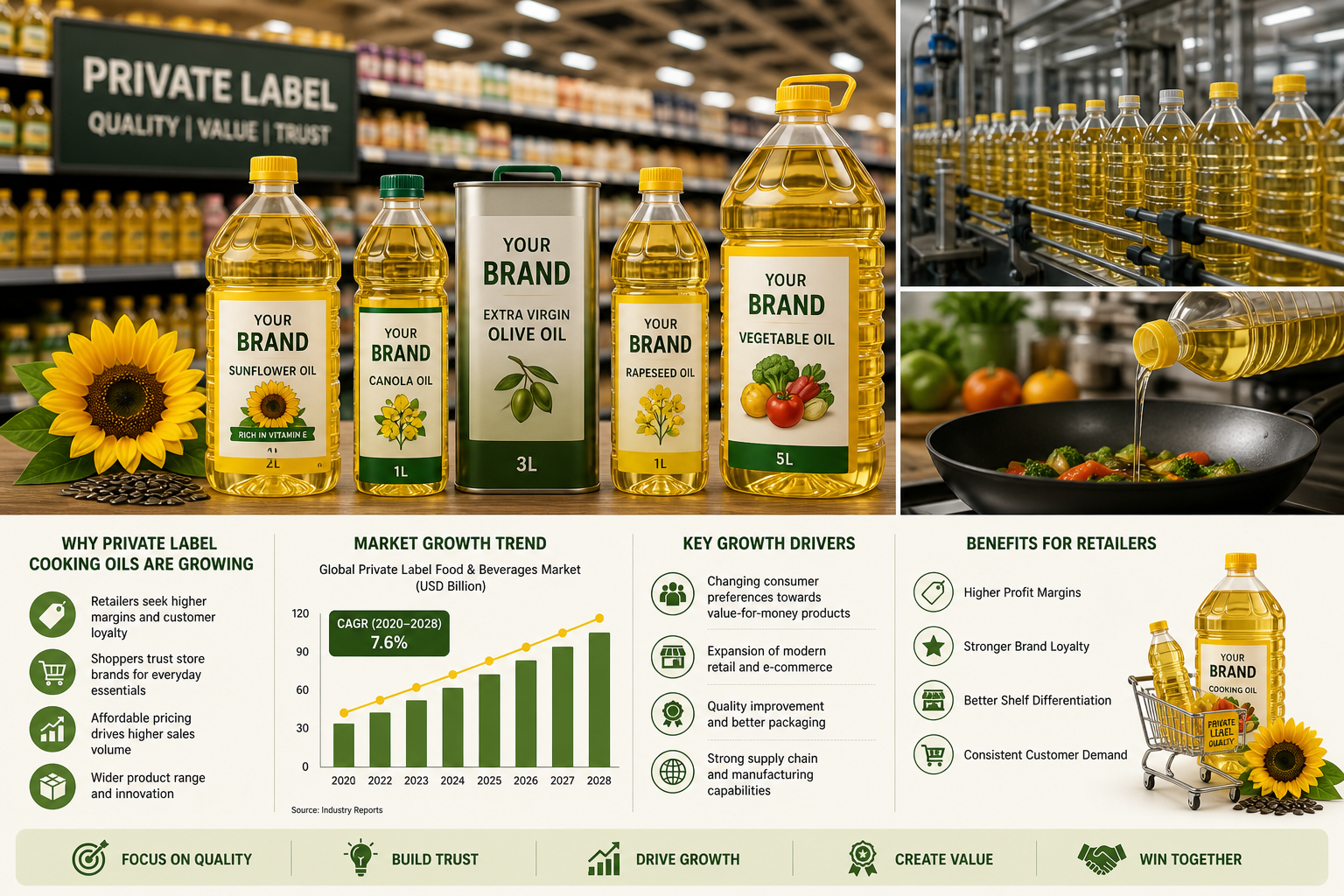
The Growth of Private Label Cooking Oil Brands
The growth of private label cooking oil brands has accelerated across global markets, driven by retailers, distributors, and wholesalers seeking greater control over pricing, branding, and profit margins. For companies operating in the edible oil sector, private label products offer a strategic opportunity to compete effectively in both retail and wholesale markets.
Private label cooking oil, including sunflower oil, is now widely used by supermarkets, food distributors, and importers. Buyers sourcing from a private label sunflower oil supplier can create customized products tailored to their market needs.
—What Are Private Label Cooking Oil Brands?
Private label cooking oil brands are products manufactured by a supplier but sold under a retailer’s or distributor’s brand name. Instead of selling branded products from large manufacturers, businesses create their own branded oil products.
This approach allows companies to control product positioning, pricing, and marketing strategies.
—Why Private Label Cooking Oil Is Growing
Several factors are driving the growth of private label cooking oil brands:
- Increased competition in retail markets
- Demand for cost-effective products
- Higher profit margins compared to branded products
- Greater control over branding and packaging
- Expansion of supermarket and distribution networks
Retailers are increasingly shifting toward private label products to strengthen their market position.
—Role of Sunflower Oil in Private Label Growth
Sunflower oil is one of the most popular choices for private label products due to its versatility and wide consumer acceptance. It is commonly used for cooking, food manufacturing, and retail distribution.
Products such as bottled sunflower oil are ideal for private label branding, especially in supermarket chains and wholesale distribution.
—Benefits of Private Label Cooking Oil Brands
1. Higher Profit Margins
Private label products typically offer better margins compared to branded products, as businesses control pricing and distribution.
2. Brand Control
Companies can create their own brand identity, packaging design, and marketing strategy.
3. Market Flexibility
Private label allows businesses to adapt products to local market preferences.
4. Competitive Advantage
Retailers can differentiate themselves by offering exclusive products.
—Private Label Opportunities for Importers and Distributors
Importers and distributors can benefit significantly from private label cooking oil:
- Launch their own branded products
- Expand product offerings
- Increase customer loyalty
- Control supply chain and pricing
Businesses can explore bulk sunflower oil supply for large-scale private label production.
—Packaging and Branding Considerations
Packaging plays a critical role in private label success. Common packaging options include:
- 1L, 2L, and 5L bottles for retail
- Custom labels and branding
- Carton packaging for distribution
- Palletized shipments for wholesale
Explore packaging solutions and packaging types for more options.
—Supply Chain and Logistics
Efficient logistics are essential for private label operations. Businesses must ensure consistent supply, reliable delivery, and proper inventory management.
Key logistics considerations include:
- Shipping methods and routes
- Delivery timelines
- Storage and warehousing
Learn more through export logistics and shipping methods.
For international trade terms, refer to ICC Incoterms.
—Challenges in Private Label Cooking Oil
Despite its growth, private label cooking oil comes with challenges:
- Initial setup costs
- Brand development requirements
- Quality consistency
- Regulatory compliance
Working with experienced suppliers helps reduce these risks.
—Future Outlook
The growth of private label cooking oil brands is expected to continue as retailers and distributors seek greater control over their products. Increasing competition and consumer demand for value-driven products will further drive this trend.
Private label sunflower oil will remain a key segment in both retail and wholesale markets.
—Conclusion
Private label cooking oil brands offer significant opportunities for retailers, importers, and distributors. By controlling branding, pricing, and supply chains, businesses can improve margins and strengthen their market position.
Working with reliable suppliers ensures consistent quality and successful product development in competitive markets.
Start Your Private Label Cooking Oil Brand
If you are looking to launch your own sunflower oil brand, send your requirements for a tailored quotation.
Frequently Asked Questions
What is private label cooking oil?
It is cooking oil produced by a supplier but sold under a retailer’s or distributor’s brand.
Why are private label brands growing?
They offer higher margins, brand control, and competitive advantages.
Is sunflower oil suitable for private label?
Yes, it is widely used and highly accepted in global markets.
Who can start a private label brand?
Retailers, distributors, wholesalers, and importers can all develop private label products.
—