
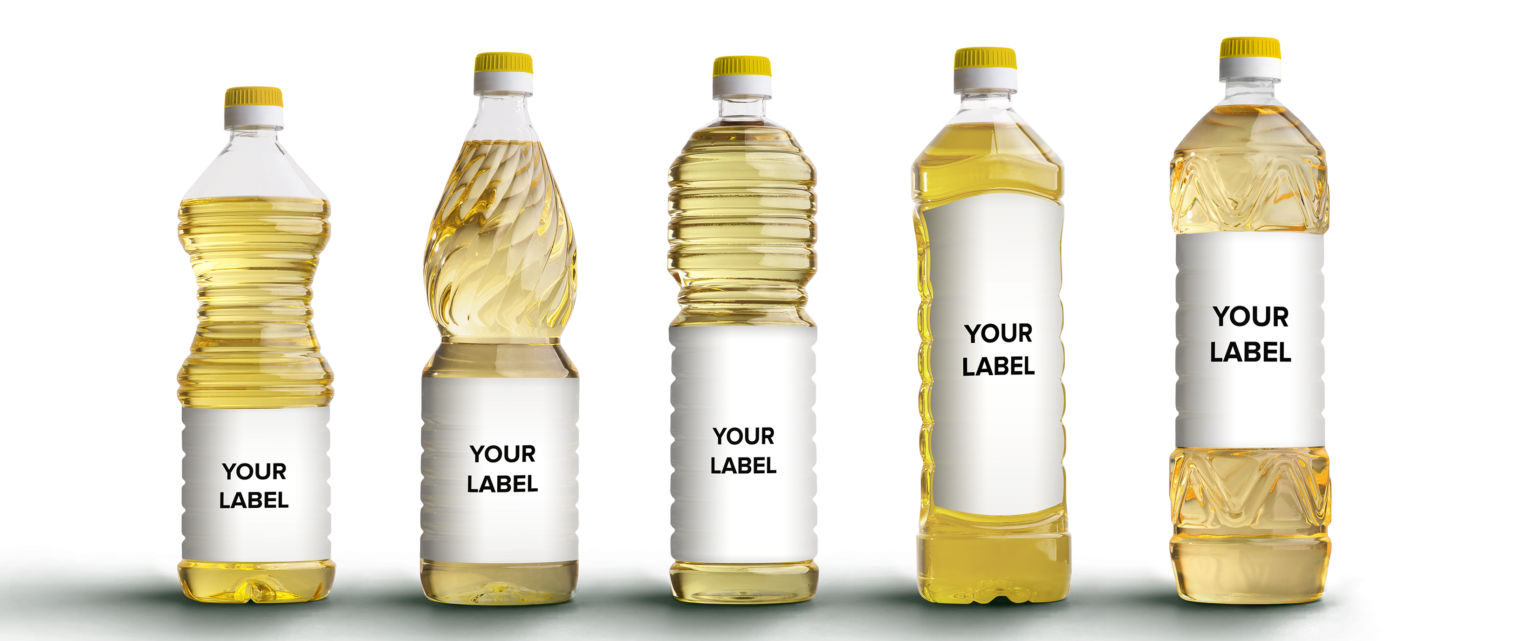
Private Label Sunflower Oil Guide for Brands & Wholesale Buyers
“`Private label sunflower oil continues to grow rapidly across supermarkets, food distribution networks, wholesale grocery markets, and international retail chains. More importers, distributors, wholesalers, and food entrepreneurs are launching their own cooking oil brands instead of relying entirely on third-party retail products.
This private label sunflower oil guide explains how OEM sunflower oil manufacturing works, including bottle sizes, custom labeling, packaging options, production processes, certifications, export logistics, and how to choose the right private label sunflower oil manufacturer.
Whether you are building a supermarket cooking oil brand, importing wholesale cooking oil, or launching your own food distribution company, understanding the private label process is essential before selecting a supplier.
“`What Is Private Label Sunflower Oil?
“`Private label sunflower oil refers to sunflower oil manufactured and packaged under a buyer’s own brand name instead of the supplier’s brand. The supplier handles production, bottling, packaging, and export preparation while the buyer markets and distributes the product under their own identity.
Private label manufacturing is widely used by:
- Supermarket chains
- Wholesale grocery suppliers
- Importers
- Food distributors
- Restaurant supply companies
- Retail food brands
- Private equity food businesses
- International wholesalers
Many buyers choose private label manufacturing because it allows them to build their own retail presence without investing directly in edible oil production facilities.
“`How Private Label Sunflower Oil Manufacturing Works
“`The private label process usually involves multiple stages, from supplier selection to final export shipment. Professional OEM sunflower oil suppliers typically provide structured production and packaging systems designed for wholesale and retail distribution.
Step 1 — Product Selection
Buyers first select the sunflower oil type required for their target market. Common options include refined sunflower oil, high oleic sunflower oil, non-GMO sunflower oil, and organic sunflower oil.
Step 2 — Bottle & Packaging Selection
After selecting the oil type, buyers choose bottle sizes, carton structures, cap styles, labeling formats, and pallet configurations.
Most private label sunflower oil buyers use:
- 1L bottles
- 2L bottles
- 3L bottles
- 5L bottles
- 10L containers
- Retail cartons
- Palletized export packaging
Buyers can review additional options on the sunflower oil packaging solutions page.
Step 3 — Label Design & Branding
The supplier applies the buyer’s custom label, logo, nutritional information, barcode structure, and market-specific packaging requirements.
Professional suppliers typically support:
- Custom front labels
- Private brand logos
- Multilingual packaging
- Retail barcode systems
- Country-specific compliance labeling
- Custom carton branding
Step 4 — Production & Quality Control
Once designs are approved, the supplier proceeds with bottling, labeling, packaging, and final quality inspection. Buyers sourcing wholesale sunflower oil should always evaluate the supplier’s sunflower oil quality control standards and manufacturing structure.
Step 5 — Export & Delivery
After production is completed, the shipment is prepared for export using pallets, containers, or retail-ready logistics systems depending on the buyer’s destination market.
“`Why Businesses Choose Private Label Sunflower Oil
“`Private label manufacturing gives importers and wholesalers greater control over branding, pricing strategy, distribution, and customer loyalty.
Advantages include:
- Building your own cooking oil brand
- Higher long-term profit margins
- Greater retail market control
- Brand recognition growth
- Flexible packaging options
- International export opportunities
- Wholesale distribution scalability
Many supermarkets and distributors increasingly prefer private label products because they reduce dependency on external retail brands.
“`Best Bottle Sizes for Private Label Sunflower Oil
“`The ideal bottle size depends on the buyer’s target market, retail pricing strategy, and customer purchasing behavior.
1L & 2L Bottles
These are among the most popular retail cooking oil formats for supermarkets, convenience stores, and grocery chains.
3L & 5L Bottles
These formats are commonly used by larger households, restaurants, and food service buyers.
10L & 20L Containers
Larger formats are typically used by restaurants, industrial kitchens, catering companies, and food manufacturing businesses.
Retail-ready buyers often source from a bottled sunflower oil supplier that supports flexible packaging structures.
“`How to Choose a Private Label Sunflower Oil Supplier
“`Choosing the right OEM sunflower oil supplier is one of the most important decisions for private label buyers. A strong supplier should support manufacturing, packaging, logistics, documentation, and export coordination.
Manufacturing Capability
Buyers should evaluate whether the supplier has a visible sunflower oil manufacturing process and production infrastructure.
Export Experience
International private label supply requires logistics coordination, commercial documentation, and export planning. Buyers can review sunflower oil export logistics before confirming large orders.
Food Safety Certifications
Reliable suppliers usually maintain certifications such as ISO standards for sunflower oil export, HACCP certification for food safety, and Halal certified sunflower oil supply.
Flexible Packaging Systems
Packaging flexibility is essential for supermarket and distributor requirements. Buyers should confirm carton structures, pallet quantities, labeling support, and retail compliance systems before production begins.
“`Private Label Sunflower Oil Export Logistics
“`Export logistics play a major role in private label cooking oil distribution. International buyers should understand shipping timelines, documentation requirements, packaging structures, and delivery terms before confirming procurement.
Useful internal resources include international shipping methods for sunflower oil, sunflower oil delivery terms, and international sunflower oil export.
Most private label sunflower oil shipments are transported through:
- Palletized containers
- Retail-ready export cartons
- Containerized shipping
- Warehouse distribution systems
Important Certifications for Private Label Cooking Oil
“`Certifications are extremely important in international food distribution. Supermarkets, importers, and wholesalers often require recognized food safety documentation before approving suppliers.
Important certification structures include:
- Sunflower oil certifications
- ISO standards
- HACCP certification
- Halal certification
- Export compliance documentation
For international food safety guidance, buyers may also review the FAO Food & Agriculture Organization and the ISO International Standards.
“`What Impacts Private Label Sunflower Oil Pricing?
“`Private label sunflower oil pricing depends on several factors, including oil type, bottle size, packaging complexity, label requirements, production volume, shipping costs, and international market conditions.
Key pricing factors include:
- Type of sunflower oil
- Packaging format
- Custom labeling complexity
- Production volume
- Container shipping costs
- Export destination
- Retail compliance requirements
Buyers evaluating market conditions can also review sunflower oil prices in Europe 2026, global sunflower oil demand forecast, and the growth of private label cooking oil brands.
“`Why Private Label Cooking Oil Demand Is Growing
“`Global demand for private label cooking oil continues to increase because supermarkets and distributors want stronger control over branding, pricing, and supply chain management.
Private label products also help retailers improve customer loyalty while increasing profit margins compared to third-party retail brands.
Many international distributors are also expanding into private label edible oil because of increasing demand across Europe, Africa, the Middle East, and global wholesale food markets.
“`Why Inter Oliya Supports Private Label Buyers
“`Inter Oliya supports wholesalers, importers, supermarkets, distributors, and food businesses looking for private label sunflower oil manufacturing with export coordination and flexible packaging systems.
The company structure supports:
- Custom branded sunflower oil
- Retail-ready packaging
- Export logistics coordination
- Food safety compliance
- Wholesale procurement support
- International distribution supply
Buyers can also explore bulk sunflower oil supply, bottled sunflower oil supply, and request a wholesale sunflower oil quote.
“`Frequently Asked Questions
“`What is private label sunflower oil?
Private label sunflower oil is sunflower oil manufactured and packaged under a buyer’s own brand instead of the supplier’s brand.
Who buys private label sunflower oil?
Private label sunflower oil is commonly purchased by supermarkets, wholesalers, distributors, importers, food brands, and grocery chains.
What bottle sizes are available for private label cooking oil?
Common bottle sizes include 1L, 2L, 3L, 5L, 10L, and larger commercial containers depending on buyer requirements.
Can suppliers provide custom labels and packaging?
Yes. Professional OEM sunflower oil suppliers commonly support custom labels, branded cartons, multilingual packaging, and retail-ready packaging systems.
What certifications should a private label supplier have?
Professional suppliers commonly provide ISO, HACCP, Halal, and export compliance documentation.
Why is private label sunflower oil growing internationally?
Private label products help supermarkets and distributors improve brand control, customer loyalty, pricing flexibility, and long-term profitability.
“`Conclusion
“`Private label sunflower oil manufacturing gives importers, wholesalers, supermarkets, and food brands the opportunity to build scalable cooking oil businesses without operating their own production facilities.
Choosing the right supplier requires careful evaluation of manufacturing systems, export logistics, certifications, packaging capability, and long-term procurement support.
Businesses exploring wholesale private label supply can review private label sunflower oil manufacturing, sunflower oil packaging solutions, international sunflower oil export logistics, or request a wholesale sunflower oil quote.
“`