
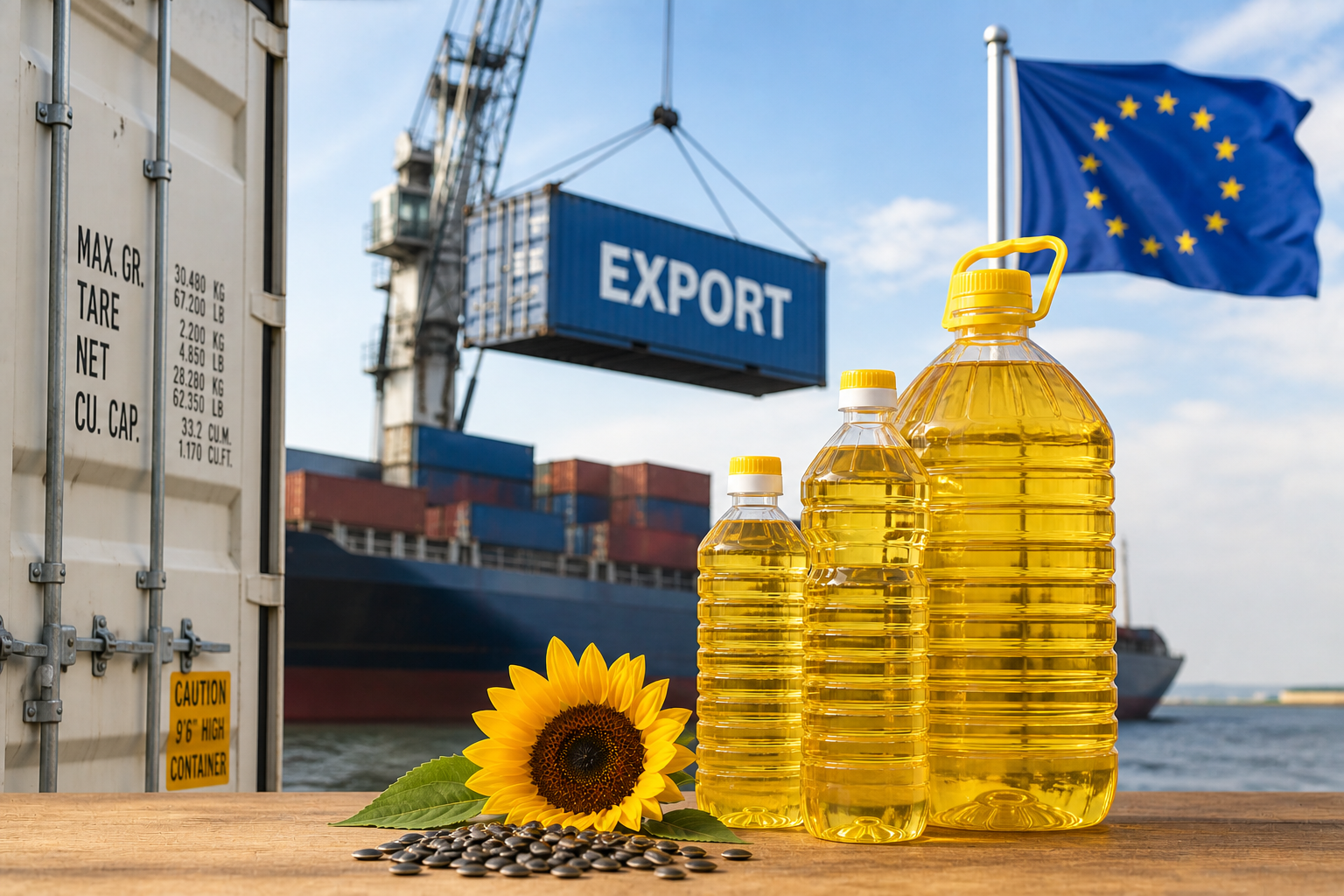
How to Import Sunflower Oil into Europe
Importing sunflower oil into Europe requires a structured approach that combines supplier selection, regulatory compliance, logistics planning, and quality assurance. For distributors, wholesalers, food manufacturers, and private label brands, understanding the import process ensures smooth operations, reduced risk, and long-term supply reliability.
This guide explains the complete process of importing sunflower oil into European markets, including legal requirements, shipping methods, documentation, and how to work with a reliable supplier such as bulk sunflower oil suppliers or private label sunflower oil manufacturers.
—Understanding Sunflower Oil Import Requirements in Europe
European Union (EU) regulations for edible oil imports are strict and designed to ensure food safety, traceability, and product quality. Importers must comply with food-grade standards, labeling requirements, and traceability systems.
Sunflower oil imported into Europe must meet:
- Food safety compliance under EU regulations
- Traceability of origin and production
- Proper labeling for retail or bulk use
- Approved packaging and storage conditions
Importers can review official EU food safety guidelines via European Commission Food Safety to understand regulatory frameworks.
—Choosing the Right Sunflower Oil Supplier
Selecting the right supplier is one of the most critical steps in the import process. European buyers typically work with exporters that provide consistent supply, proper documentation, and export experience.
Reliable suppliers should offer:
- Bulk sunflower oil export capabilities
- Private label and bottling options
- Export documentation support
- Quality certifications such as ISO and HACCP
Buyers looking for large-scale procurement can explore refined sunflower oil suppliers or compare options between refined vs crude sunflower oil depending on their needs.
—Import Documentation Required for Sunflower Oil
To import sunflower oil into Europe, specific documents are required for customs clearance and compliance. Missing or incorrect documentation can delay shipments or lead to rejection.
Standard import documentation includes:
- Commercial Invoice
- Packing List
- Bill of Lading
- Certificate of Origin
- Health and Safety Certificates
- Quality inspection documents
You can learn more about documentation requirements in our detailed guide on sunflower oil export documentation.
—Shipping and Logistics for Sunflower Oil Import
Sunflower oil is transported internationally using different methods depending on volume and packaging type. Bulk buyers and industrial clients typically use:
- Flexitank containers for large volumes
- ISO tanks for liquid bulk transport
- Palletized bottled shipments for retail distribution
Choosing the right shipping method depends on cost, destination, and order size. For a complete overview, refer to sunflower oil shipping methods and delivery terms such as FOB, CIF, and DAP.
For global shipping standards, buyers can consult ICC Incoterms Guidelines.
—Packaging and Storage Considerations
Packaging plays a crucial role in maintaining product quality during transportation and storage. European buyers must ensure packaging meets both safety and distribution requirements.
Common packaging formats include:
- 1L, 2L, 5L retail bottles
- Bulk containers for industrial use
- Private label branded packaging
Explore packaging solutions in detail at sunflower oil packaging solutions and packaging types for export.
—Quality Control and Certification Requirements
European markets require strict compliance with food safety and quality standards. Importers must ensure sunflower oil meets certification requirements before entering the market.
Important certifications include:
- ISO standards
- HACCP certification
- Halal certification (for specific markets)
Learn more about compliance through sunflower oil certifications and quality control processes.
For international food safety frameworks, refer to FAO Food & Agriculture Organization.
—Cost Factors When Importing Sunflower Oil
The total cost of importing sunflower oil into Europe depends on multiple factors, including product type, quantity, shipping method, and delivery terms.
Key cost components include:
- Product price per metric ton
- Freight and shipping costs
- Import duties and taxes
- Packaging and handling fees
Buyers should evaluate offers carefully and compare suppliers based on both price and service reliability.
—Final Thoughts on Importing Sunflower Oil into Europe
Importing sunflower oil into Europe is a structured process that requires attention to compliance, supplier reliability, logistics, and quality standards. Businesses that understand these factors can secure consistent supply, reduce risks, and build long-term partnerships.
For companies looking to import sunflower oil in bulk or under private label, working with an experienced exporter simplifies the process significantly. You can explore supply options or request a quotation based on your specific requirements.
—Frequently Asked Questions
What documents are required to import sunflower oil into Europe?
Importers need a commercial invoice, packing list, bill of lading, certificate of origin, and relevant food safety certificates.
Can I import sunflower oil in bulk?
Yes, bulk imports are common and are usually transported using flexitanks or ISO tanks.
What certifications are required for sunflower oil in Europe?
ISO, HACCP, and other food safety certifications are typically required for compliance.
What is the best shipping method for sunflower oil?
The best method depends on volume, with flexitanks being the most cost-effective for bulk shipments.
How do I choose a reliable sunflower oil supplier?
Look for suppliers with export experience, proper certifications, and transparent documentation processes.