
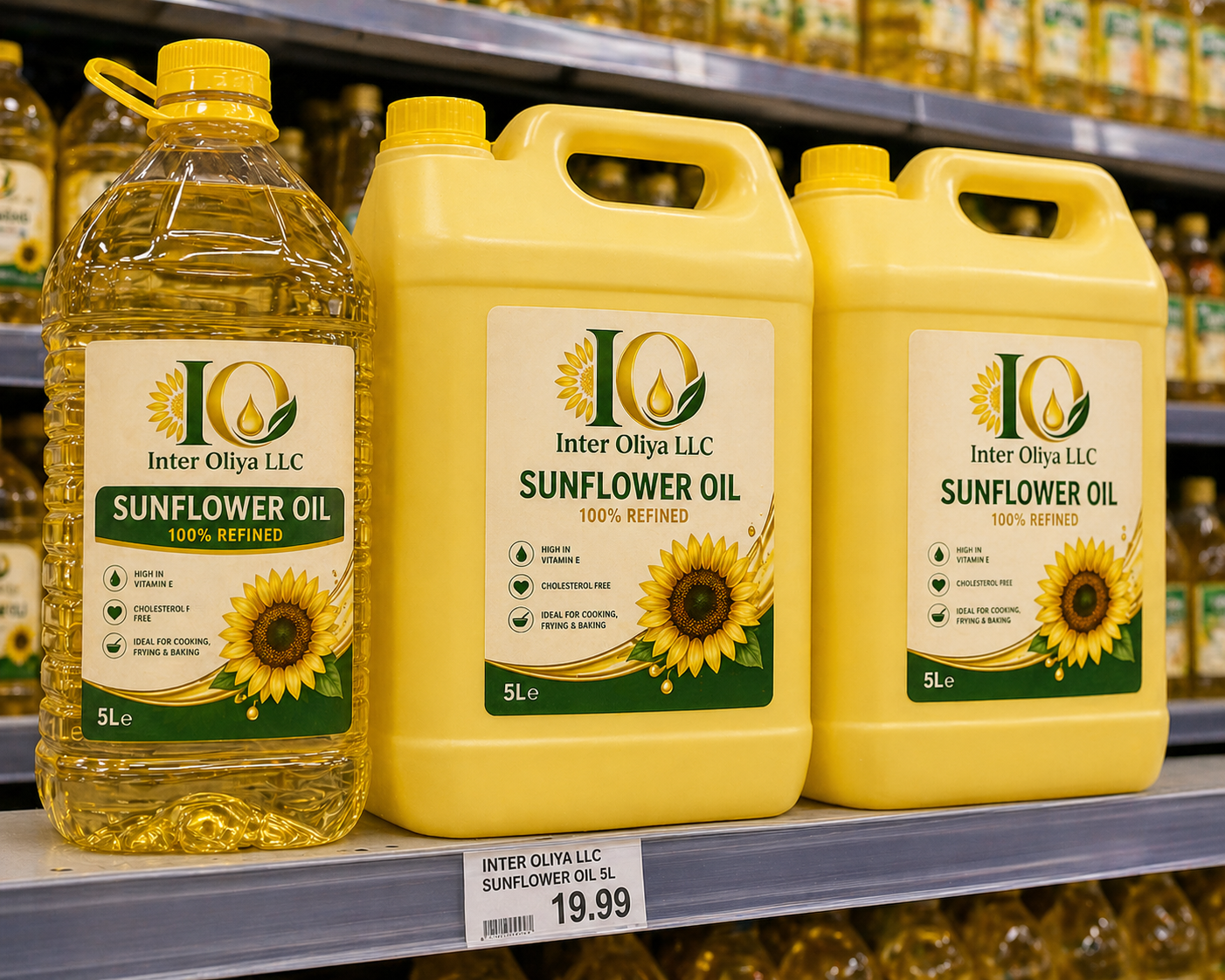
Refined vs Crude Sunflower Oil: Understanding the Key Differences
Understanding the difference between refined and crude sunflower oil is extremely important for wholesalers, importers, food manufacturers, edible oil traders, private label brands, and industrial buyers sourcing sunflower oil internationally.
Although both products originate from sunflower seeds, they serve different commercial purposes, undergo different processing methods, and target different buyer categories across international food and industrial markets.
This guide explains the major differences between refined sunflower oil and crude sunflower oil, including refining processes, applications, food safety considerations, export structures, packaging systems, and how buyers choose the right product for their business model.
“`What Is Crude Sunflower Oil?
“`Crude sunflower oil is the raw, unrefined oil extracted directly from sunflower seeds before undergoing purification and food-grade processing. It contains natural impurities, waxes, phospholipids, pigments, moisture, and free fatty acids that are typically removed during refining.
Crude sunflower oil is primarily used as an industrial raw material for:
- Edible oil refineries
- Industrial food processors
- Bulk commodity trading
- Further oil purification
- Large-scale manufacturing operations
Most crude sunflower oil buyers are not direct retail distributors. Instead, they are companies involved in industrial processing or secondary manufacturing.
Buyers sourcing industrial raw materials can review crude sunflower oil supply for large-volume procurement and export coordination.
“`What Is Refined Sunflower Oil?
“`Refined sunflower oil is sunflower oil that has undergone multiple purification stages to remove impurities, waxes, odors, pigments, moisture, and unstable compounds. The refining process transforms crude oil into a stable, food-grade edible oil suitable for cooking and commercial food applications.
Refined sunflower oil is commonly used for:
- Cooking oil distribution
- Retail supermarkets
- Food service operations
- Restaurants
- Private label cooking oil brands
- Wholesale grocery supply
- Food manufacturing
Buyers sourcing food-grade cooking oil can review refined sunflower oil suppliers for retail-ready and wholesale export solutions.
“`Main Differences Between Refined & Crude Sunflower Oil
“`Although both products originate from the same agricultural source, they differ significantly in processing, appearance, usability, storage stability, and commercial application.
| Category | Crude Sunflower Oil | Refined Sunflower Oil |
|---|---|---|
| Processing Level | Unrefined | Fully refined |
| Color | Darker | Clear/light yellow |
| Odor | Natural/raw odor | Neutral odor |
| Food Grade Use | Limited before refining | Ready for consumption |
| Industrial Usage | High | Moderate |
| Retail Packaging | Rare | Very common |
| Storage Stability | Lower | Higher |
| Export Buyers | Refineries/processors | Retail/import distributors |
How Sunflower Oil Refining Works
“`The refining process converts crude sunflower oil into food-grade refined oil suitable for retail and industrial food use.
The process typically includes:
- Degumming
- Neutralization
- Bleaching
- Winterization
- Deodorization
- Filtration
Each stage improves oil stability, shelf life, clarity, odor neutrality, and food safety compliance.
Buyers can review the sunflower oil refining process for a deeper technical overview of industrial edible oil purification.
“`Which Product Is Used for Retail Cooking Oil?
“`Retail cooking oil sold in supermarkets and grocery stores is almost always refined sunflower oil because it meets food-grade standards required for cooking, frying, packaging, and long-term storage.
Refined sunflower oil is commonly packaged in:
- 1L bottles
- 2L bottles
- 3L bottles
- 5L bottles
- 10L containers
Retail-ready buyers can review bottled sunflower oil supply and private label sunflower oil manufacturing for branded packaging options.
“`Industrial Uses of Crude Sunflower Oil
“`Crude sunflower oil is mainly traded as a raw industrial commodity before further refinement. Industrial buyers often purchase crude oil in large volumes for refinery operations and food processing systems.
Common industrial applications include:
- Edible oil refining
- Bulk commodity processing
- Industrial food manufacturing
- Secondary oil purification
- Large-scale processing plants
Crude oil shipments are usually transported using:
- Flexitanks
- ISO tanks
- IBC containers
- Industrial drums
Buyers can review sunflower oil packaging solutions for industrial packaging and export structures.
“`Packaging Differences Between Refined & Crude Oil
“`Packaging structures differ significantly depending on whether the buyer is sourcing refined or crude sunflower oil.
Refined Sunflower Oil Packaging
Refined sunflower oil is commonly packaged for retail and food distribution markets using:
- Retail bottles
- Consumer cartons
- Palletized packaging
- Private label packaging
Crude Sunflower Oil Packaging
Crude sunflower oil is usually shipped in bulk industrial packaging systems designed for refinery and manufacturing operations.
These include:
- Flexitanks
- ISO tanks
- IBC systems
- Bulk tank transport
Which Product Has Better Shelf Stability?
“`Refined sunflower oil generally has better storage stability because impurities, moisture, unstable compounds, and waxes have been removed during processing.
This gives refined oil:
- Longer shelf life
- Improved clarity
- More stable cooking performance
- Reduced oxidation risk
- Improved retail suitability
Crude sunflower oil is less stable because it still contains natural raw compounds that may affect storage performance over time.
“`How Buyers Choose Between Refined & Crude Sunflower Oil
“`The correct product depends entirely on the buyer’s commercial application.
Buy Refined Sunflower Oil If You Need:
- Retail cooking oil
- Supermarket distribution
- Restaurant supply
- Food-grade edible oil
- Private label cooking oil
- Wholesale grocery distribution
Buy Crude Sunflower Oil If You Need:
- Industrial processing
- Oil refinery operations
- Large-scale commodity trading
- Further edible oil purification
- Bulk industrial manufacturing
Food Safety & Certification Considerations
“`Both refined and crude sunflower oil exports require professional quality systems and export documentation. International buyers commonly require food safety certifications before approving suppliers.
Important certification structures include:
- Sunflower oil certifications
- ISO standards for sunflower oil export
- HACCP certification for food safety
- Halal certification
- Export compliance documentation
For international food safety guidance, buyers may also review the ISO International Standards and the FAO Food & Agriculture Organization.
“`Global Demand for Refined & Crude Sunflower Oil
“`Global demand for both refined and crude sunflower oil continues to increase across retail, industrial, and food manufacturing sectors.
Refined sunflower oil demand is driven primarily by:
- Supermarkets
- Restaurants
- Food distributors
- Retail cooking oil brands
- Private label businesses
Crude sunflower oil demand is driven primarily by:
- Refineries
- Industrial processors
- Commodity trading companies
- Bulk edible oil manufacturers
Buyers can also review global sunflower oil demand forecast and Ukraine sunflower oil market trends for broader market insights.
“`Why Inter Oliya Supports International Wholesale Buyers
“`Inter Oliya supports wholesalers, food manufacturers, distributors, refineries, importers, and private label businesses sourcing refined and crude sunflower oil internationally.
The company structure supports:
- Bulk sunflower oil supply
- Industrial edible oil export
- Retail-ready packaging
- Private label manufacturing
- Export logistics coordination
- Food safety compliance
Buyers can review bulk sunflower oil supply, refined sunflower oil supply, crude sunflower oil export, or request a wholesale sunflower oil quote.
“`Frequently Asked Questions
“`What is the difference between refined and crude sunflower oil?
Crude sunflower oil is unrefined raw oil, while refined sunflower oil undergoes purification processes that make it suitable for cooking and food-grade applications.
Is crude sunflower oil edible?
Crude sunflower oil is generally processed further before retail food use because it still contains impurities and unstable compounds.
Why is refined sunflower oil used for cooking?
Refined sunflower oil has improved stability, clarity, odor neutrality, and food safety suitability for cooking and retail applications.
Who buys crude sunflower oil?
Crude sunflower oil is commonly purchased by edible oil refineries, industrial processors, and bulk commodity trading companies.
What packaging is used for crude sunflower oil?
Crude sunflower oil is commonly transported using flexitanks, ISO tanks, IBC containers, and industrial bulk packaging systems.
What certifications should sunflower oil suppliers provide?
Professional sunflower oil suppliers commonly provide ISO, HACCP, Halal, and export compliance documentation.
“`Conclusion
“`Understanding the difference between refined and crude sunflower oil helps importers, wholesalers, industrial buyers, and food manufacturers select the right product for their commercial application.
While refined sunflower oil is designed primarily for food-grade retail and cooking applications, crude sunflower oil serves as a raw industrial product used for further processing and refining operations.
Businesses sourcing wholesale sunflower oil can explore refined sunflower oil suppliers, crude sunflower oil exporters, international sunflower oil export logistics, or request a wholesale sunflower oil quote.
“`