
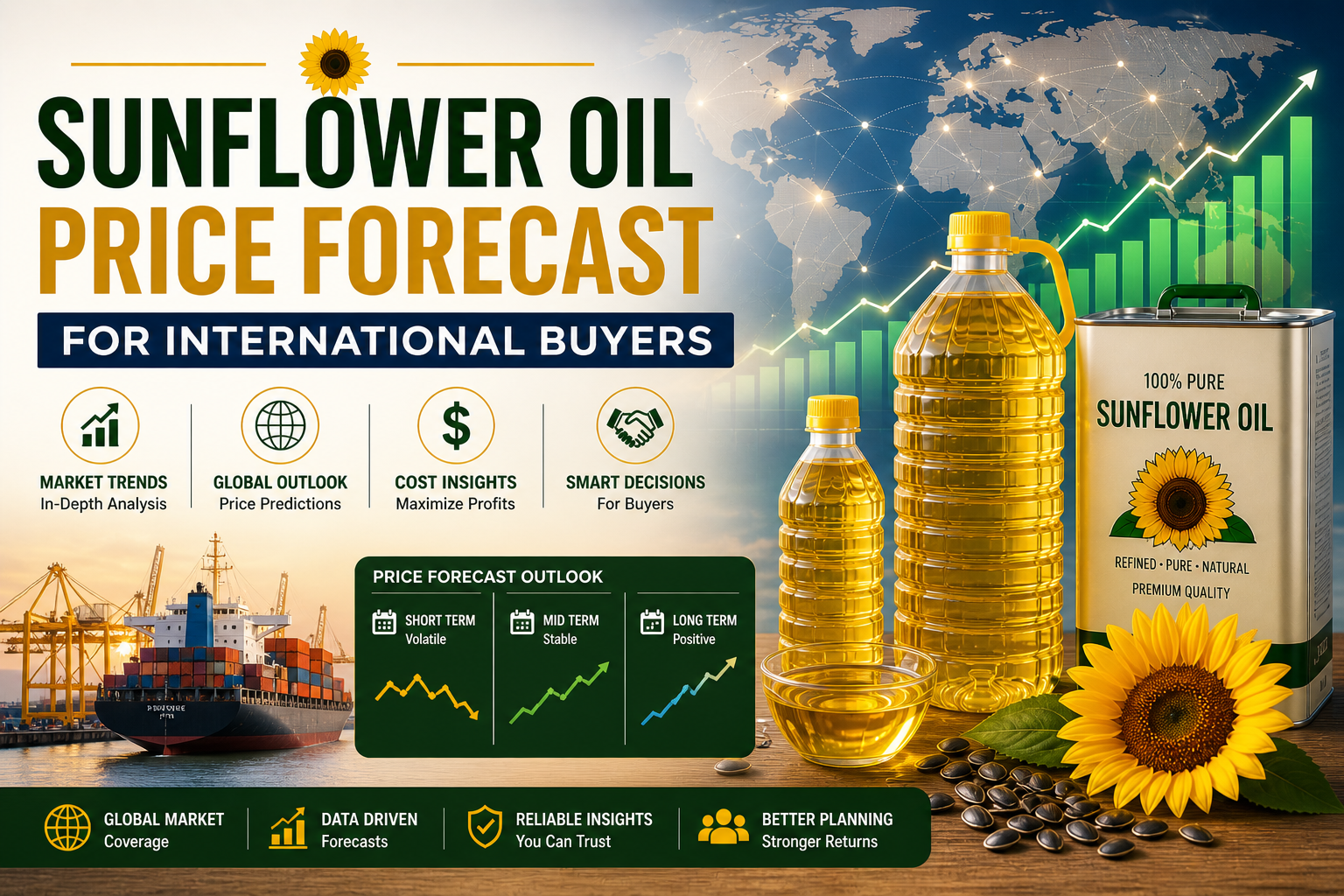
Sunflower Oil Price Forecast for International Buyers
The sunflower oil price forecast is an important topic for importers, wholesalers, food manufacturers, distributors, and private label brands planning bulk purchases. Prices can change depending on harvest conditions, export availability, global demand, logistics costs, packaging requirements, and delivery terms.
For international buyers, understanding these factors helps with better procurement planning, supplier selection, and long-term cost control. At Inter Oliya, we support buyers sourcing sunflower oil for wholesale, retail, food production, and export supply needs.
What Affects Sunflower Oil Prices?
Sunflower oil prices are influenced by several market and supply chain factors. Buyers should not look only at the base oil price, but also at logistics, packaging, certification, and final delivery costs.
1. Sunflower Seed Harvest and Production Volume
Sunflower oil pricing begins with agricultural production. Weather conditions, planting areas, crop yield, and seed availability can all affect the final price of crude and refined sunflower oil. When harvest output is lower, raw material prices usually become more sensitive.
Buyers interested in finished edible oil can review our refined sunflower oil supply page, while industrial buyers can compare options with our crude sunflower oil page.
2. Export Availability from Producing Countries
Export availability plays a major role in international sunflower oil pricing. Ukraine remains one of the most important sunflower oil supply regions, and any change in production, port access, transport routes, or export conditions can affect global buyer pricing.
Buyers sourcing from Ukraine can also read our guide on sunflower oil export from Ukraine for more background on supply and export planning.
3. Global Demand for Edible Oils
Demand from food manufacturers, supermarkets, wholesalers, and private label brands can affect sunflower oil prices. When demand increases across Europe, the Middle East, Africa, and global food manufacturing markets, bulk buyers may face stronger competition for available supply.
For companies buying large volumes, our bulk sunflower oil supplier page explains available commercial supply options.
4. Packaging and Private Label Requirements
Packaging has a direct impact on final cost. Bulk oil, bottled sunflower oil, private label packaging, cartons, pallets, and custom branding all affect pricing. A buyer ordering bulk oil will usually have a different cost structure compared to a supermarket brand ordering retail-ready bottles.
Buyers preparing retail products can explore our private label sunflower oil page and our packaging solutions page.
5. Shipping, Freight, and Delivery Terms
Logistics costs are one of the biggest pricing variables for international buyers. Freight rates, container availability, route distance, destination country, port charges, and delivery terms all influence the final landed cost.
To understand how delivery terms affect pricing, buyers should review our delivery terms page and our guide on CIF, FOB, and DAP shipping terms.
Sunflower Oil Price Outlook for International Buyers
The sunflower oil market is expected to remain influenced by supply availability, global food demand, freight conditions, and agricultural output. Buyers should expect price movement rather than fixed long-term stability, especially when purchasing large export quantities.
International buyers can reduce pricing risk by planning orders earlier, confirming packaging requirements clearly, and working with suppliers that understand export documentation and logistics coordination.
How Buyers Can Manage Sunflower Oil Price Risk
Plan Bulk Orders Early
Early planning allows buyers to confirm availability, compare delivery terms, and avoid last-minute price pressure. This is especially important for importers buying for supermarkets, distributors, or food manufacturing contracts.
Our bulk sunflower oil buying guide explains how buyers can prepare before placing commercial orders.
Choose the Right Product Type
Refined sunflower oil, crude sunflower oil, organic sunflower oil, high oleic sunflower oil, and private label sunflower oil all serve different buyer needs. Choosing the correct product type helps avoid unnecessary cost and improves procurement efficiency.
Buyers can compare our product categories through the sunflower oil products page.
Understand Documentation and Compliance
Export documentation, food safety certificates, and compliance requirements can affect delivery timelines and buyer confidence. Importers should always work with suppliers that understand international export requirements.
Inter Oliya provides more information on export compliance, ISO standards, HACCP certification, and Halal certification.
Useful External Market References
Buyers can also review international resources to understand wider food, agriculture, and trade conditions. The Food and Agriculture Organization of the United Nations provides global food and agriculture information, while the International Chamber of Commerce Incoterms rules explain international delivery terms used in global trade.
For food safety and quality systems, buyers can also review ISO international standards.
Best Buying Strategy for Sunflower Oil Importers
The best strategy for sunflower oil buyers is to combine price awareness with supplier reliability. The lowest price is not always the best commercial option if the supplier cannot provide consistent quality, proper documentation, realistic delivery terms, and reliable export coordination.
Before placing an order, buyers should confirm:
- Required sunflower oil type
- Order quantity
- Packaging format
- Destination country or port
- Delivery terms
- Certification requirements
- Private label or bulk supply needs
Buyers ready to discuss commercial supply can submit details through our request quote page.
Conclusion
The sunflower oil price forecast depends on agricultural production, global demand, export availability, logistics costs, packaging requirements, and delivery terms. International buyers who understand these factors can make better procurement decisions and reduce supply chain risk.
Inter Oliya supports bulk buyers, distributors, food manufacturers, importers, and private label brands with structured sunflower oil supply and export coordination. To begin sourcing, visit our bulk sunflower oil supplier page or send an inquiry through our contact page.
Frequently Asked Questions
What affects sunflower oil prices the most?
Sunflower oil prices are mainly affected by crop production, export availability, global demand, logistics costs, packaging format, and delivery terms.
Is sunflower oil pricing the same for bulk and bottled orders?
No. Bulk sunflower oil, bottled sunflower oil, and private label sunflower oil usually have different pricing structures because packaging, labeling, cartons, and logistics costs vary.
How can buyers reduce sunflower oil price risk?
Buyers can reduce price risk by planning orders early, confirming specifications clearly, understanding delivery terms, and working with reliable export suppliers.
Where can I buy sunflower oil in bulk?
Buyers can review Inter Oliya’s bulk sunflower oil supplier page or submit an inquiry through the request quote page.
Do delivery terms affect sunflower oil prices?
Yes. FOB, CIF, DAP, and other delivery terms affect the final cost because each term includes different responsibilities for freight, insurance, transport, and delivery.