
Technical Guide for Wholesale & Procurement Buyers
Sunflower Oil Refining Process: From Crude Oil to Refined Supply
Understand how crude sunflower oil is transformed through degumming, neutralization, washing, bleaching, dewaxing, deodorization, filtration and final quality review. This guide also explains which process details, specifications and facility evidence B2B buyers should verify before purchasing refined sunflower oil.
- 8 Core Stages From crude-oil pretreatment to final release
- Chemical or Physical Pathway depends on feedstock and target quality
- Dewaxing Matters Supports clarity at lower temperatures
- Buyer Verification Specification, batch, facility and documents
Refinery design and operating conditions differ by crude-oil quality, equipment, target specification and commercial requirements. The actual process and evidence applicable to an order must be confirmed in writing.
Explain the Refining Process
A technically structured overview of how crude sunflower oil becomes refined edible oil.
Procurement-Focused Guidance
Connect each refining stage to product quality, specification and supplier evaluation.
Refined Oil From 10 MT
Eligible wholesale and export quotations begin from a 10-metric-tonne minimum order.
Facility & Batch Verification
Confirm the actual refinery, product, analysis, packaging and document scope before ordering.
Refining Overview
What is the sunflower oil refining process?
The sunflower oil refining process is the controlled industrial treatment of crude sunflower oil to reduce gums, free fatty acids, pigments, waxes, trace impurities, volatile compounds, moisture and other materials that can affect clarity, flavour, stability or commercial use.
Refining begins after crude oil has already been produced. Seed cleaning, preparation, pressing and solvent extraction belong to the upstream production stage; they are not refining operations themselves. This distinction is important when a buyer is comparing a seed-crushing plant, a crude-oil supplier and a refinery.
The selected pathway depends on the crude oil, the refinery design and the finished specification. Chemical refining normally removes free fatty acids through alkaline neutralization. Physical refining relies more heavily on deacidification during deodorization after sufficiently effective pretreatment.
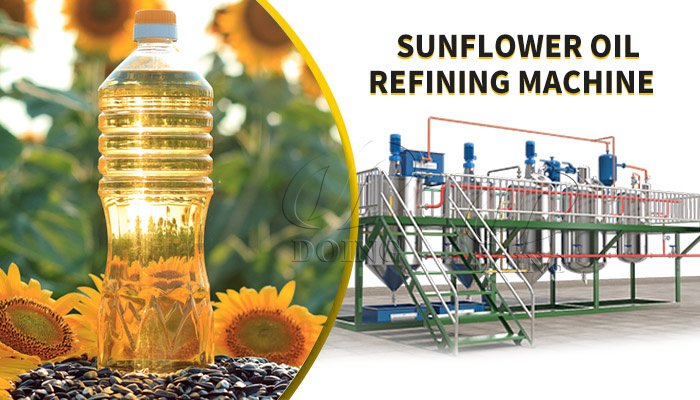
Buyers should identify whether a proposed facility crushes seeds, refines crude oil, packs finished oil or performs several of these activities.
Step-by-Step Refining
Eight core stages in the sunflower oil refining process
Not every refinery uses the same sequence or operating conditions. The following structure explains a common chemical-refining route and identifies where the physical-refining route differs.
Crude-Oil Reception & Pretreatment
The refinery reviews crude-oil identity, moisture, insoluble impurities, phosphorus, acidity and storage condition before processing.
Buyer check: crude-oil specification, origin, lot identity and suitability for the proposed refining route.Degumming
Water or acid-assisted treatment hydrates and separates phospholipids and gum-forming materials that can interfere with later stages.
Buyer relevance: effective degumming supports lower losses, cleaner bleaching and more stable finished oil.Neutralization or Deacidification
In chemical refining, an alkali reacts with free fatty acids and the resulting soapstock is separated. Physical refining removes free fatty acids later by distillation.
Buyer check: refining pathway, incoming acidity, target acid value and test method.Washing & Drying
Where chemical neutralization is used, residual soap and processing water are reduced before bleaching. Controlled drying limits moisture entering the next stage.
Buyer relevance: residual soap and moisture can affect bleaching efficiency and storage stability.Bleaching
The oil is contacted with selected adsorbents to reduce pigments, oxidation products, residual soaps, phosphatides, trace metals and other impurities before filtration.
Buyer check: finished colour, clarity, oxidation indicators and contaminant-control requirements.Dewaxing or Winterization
Sunflower oil is cooled under controlled conditions so waxes crystallize and can be removed through filtration, improving cold clarity.
Buyer relevance: important for transparent bottled oil and markets exposed to lower storage temperatures.Deodorization
Steam stripping under vacuum removes volatile odour and flavour compounds. In physical refining, this stage also removes free fatty acids.
Buyer check: sensory specification, acidity, stability and the refinery’s control of temperature, time and vacuum.Final Filtration, Cooling & Release
The refined oil is cooled, polished or filtered as required, sampled, tested and released against the approved specification before storage or packaging.
Buyer check: batch COA, appearance, packaging condition, coding and shipment-document consistency.The exact refining sequence must be confirmed for the proposed product. A website process diagram cannot replace the approved specification, batch analysis, refinery evidence and written commercial terms.
Review Quality ControlRefining Pathways
Chemical versus physical refining of sunflower oil
Both pathways aim to produce oil meeting the finished specification, but they remove free fatty acids differently and place different demands on pretreatment and process control.
Chemical Refining
Chemical refining uses alkaline neutralization to convert free fatty acids into soapstock, which is then separated from the oil before washing, drying and bleaching.
- Includes a distinct neutralization stage
- Can treat a broad range of crude-oil qualities
- Requires control of soap formation and neutral-oil loss
- Followed by bleaching, dewaxing and deodorization as required
- Finished acceptance still depends on the agreed specification
Physical Refining
Physical refining relies on effective pretreatment and removes free fatty acids by steam distillation during deodorization rather than by a separate alkali-neutralization stage.
- Requires effective removal of phospholipids and trace impurities
- Can reduce chemical effluent and neutral-oil losses
- Not every crude oil is equally suitable for the pathway
- Deodorization also performs deacidification
- Process choice should be justified by feedstock and target product
Process Function
What each refining stage is designed to reduce or control
Buyers do not need to operate the refinery, but they should understand which process stage affects the quality characteristic they are purchasing.
| Refining stage | Main materials reduced or controlled | Commercial effect | Buyer evidence |
|---|---|---|---|
| Degumming | Phospholipids, gums and associated trace materials | Improves downstream processing and reduces instability or fouling risks | Phosphorus or gum-related limits where commercially relevant |
| Neutralization | Free fatty acids through alkali reaction and soapstock separation | Reduces acidity and prepares oil for later refining stages | Acid value or FFA result and stated reporting basis |
| Washing & drying | Residual soap, water and processing carryover | Supports bleaching performance and storage stability | Moisture and residual-soap control where specified |
| Bleaching | Pigments, oxidation products, soap residues, trace metals and residual phosphatides | Improves colour, clarity, stability and downstream deodorization performance | Colour, peroxide value and agreed contaminant parameters |
| Dewaxing | Waxes and crystallizable material | Improves clarity during cool storage and retail display | Cold-test or clarity requirement where applicable |
| Deodorization | Volatile odour and flavour compounds; FFAs in physical refining | Supports neutral sensory quality, acidity control and product stability | Odour, taste, acid value, process suitability and final COA |
| Final filtration & release | Remaining fine particles and non-conforming product | Supports clean appearance, batch consistency and packaging readiness | Batch analysis, release record and packaging inspection |
Sunflower-Oil Specific Focus
Why dewaxing and winterization matter in sunflower oil refining
Sunflower oil can contain natural waxes that become visible when the oil is stored at lower temperatures. A suitable dewaxing or winterization step helps maintain the clear appearance expected in many bottled and export products.
Cold clarity is a commercial specification—not only a visual preference
Waxes may crystallize during cool transport, warehousing or retail display. Buyers should agree how clarity will be evaluated and whether a cold-test or winterization requirement applies to the intended market.
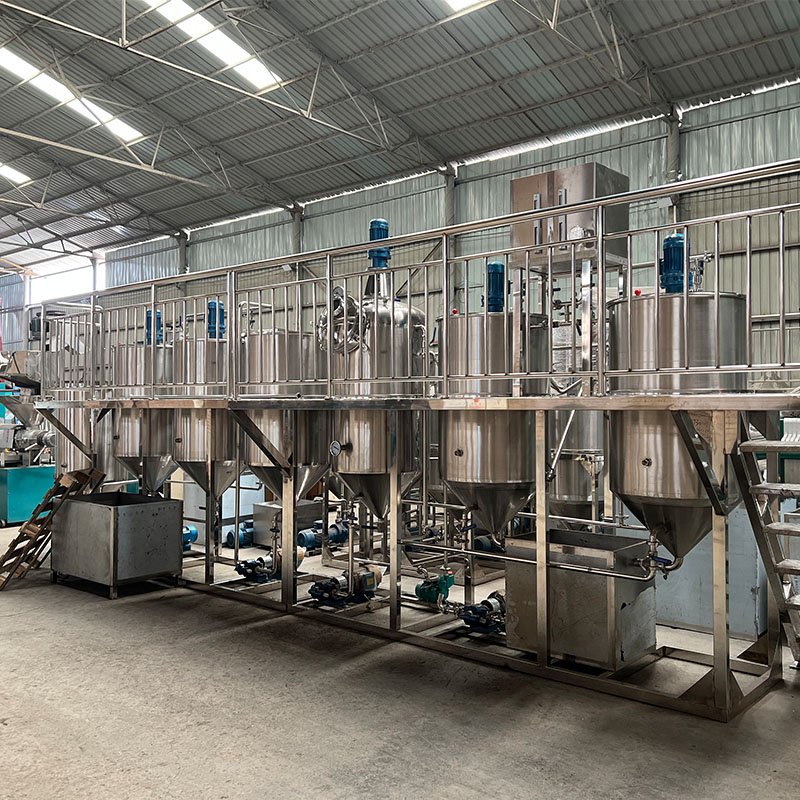
Finished-Oil Specification
How B2B buyers should verify refined sunflower oil quality
The refining process is valuable only when it produces oil that matches the agreed commercial specification. Buyers should approve measurable acceptance criteria before contracting.
Acid Value or Free Fatty Acids
Confirm the reporting basis, unit, test method and maximum value for the finished oil.
Peroxide Value
Agree the acceptance limit and the point at which the sample will be tested.
Moisture & Insoluble Impurities
Define finished-oil limits and ensure the result corresponds to the actual shipment batch.
Colour, Clarity & Cold Test
Specify the method or reference standard, especially for bottled oil and cooler markets.
Odour & Taste
Confirm the expected neutral sensory profile and the agreed assessment procedure.
Fatty-Acid Composition
Use identity criteria appropriate to standard or high-oleic sunflower oil.
Contaminants & Residues
Define destination-relevant tests for heavy metals, pesticides and other required contaminants.
Shelf Life, Storage & Packaging
Confirm temperature, light protection, packaging compatibility, coding and shelf-life basis.
Refinery Equipment & Control
Systems commonly used to refine sunflower oil
Equipment must be evaluated as part of the actual refinery—not assumed from a generic photograph. Buyers should connect the equipment, line capability and quality controls to the facility proposed for their order.
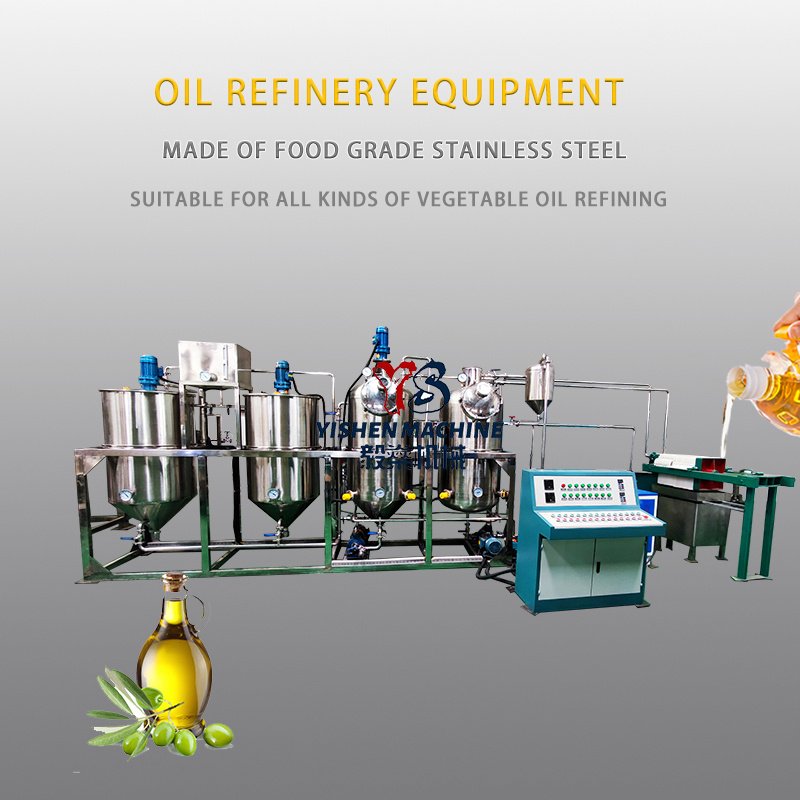
Degumming & Neutralization Systems
Mixing, reaction, heating and separation equipment support phospholipid and acidity control.
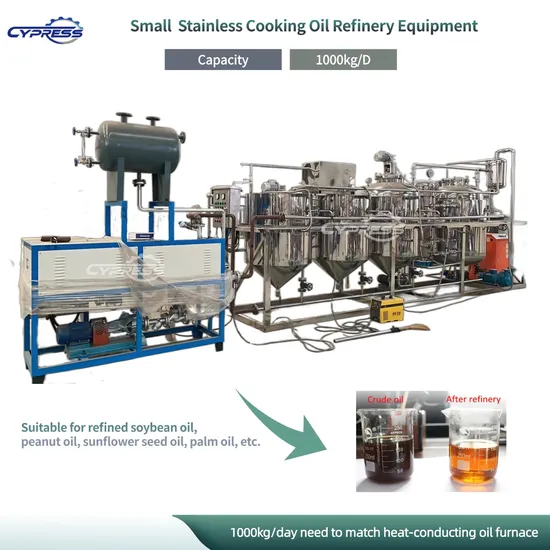
Bleaching & Filter Systems
Controlled contact with adsorbents and effective filtration support colour and impurity reduction.
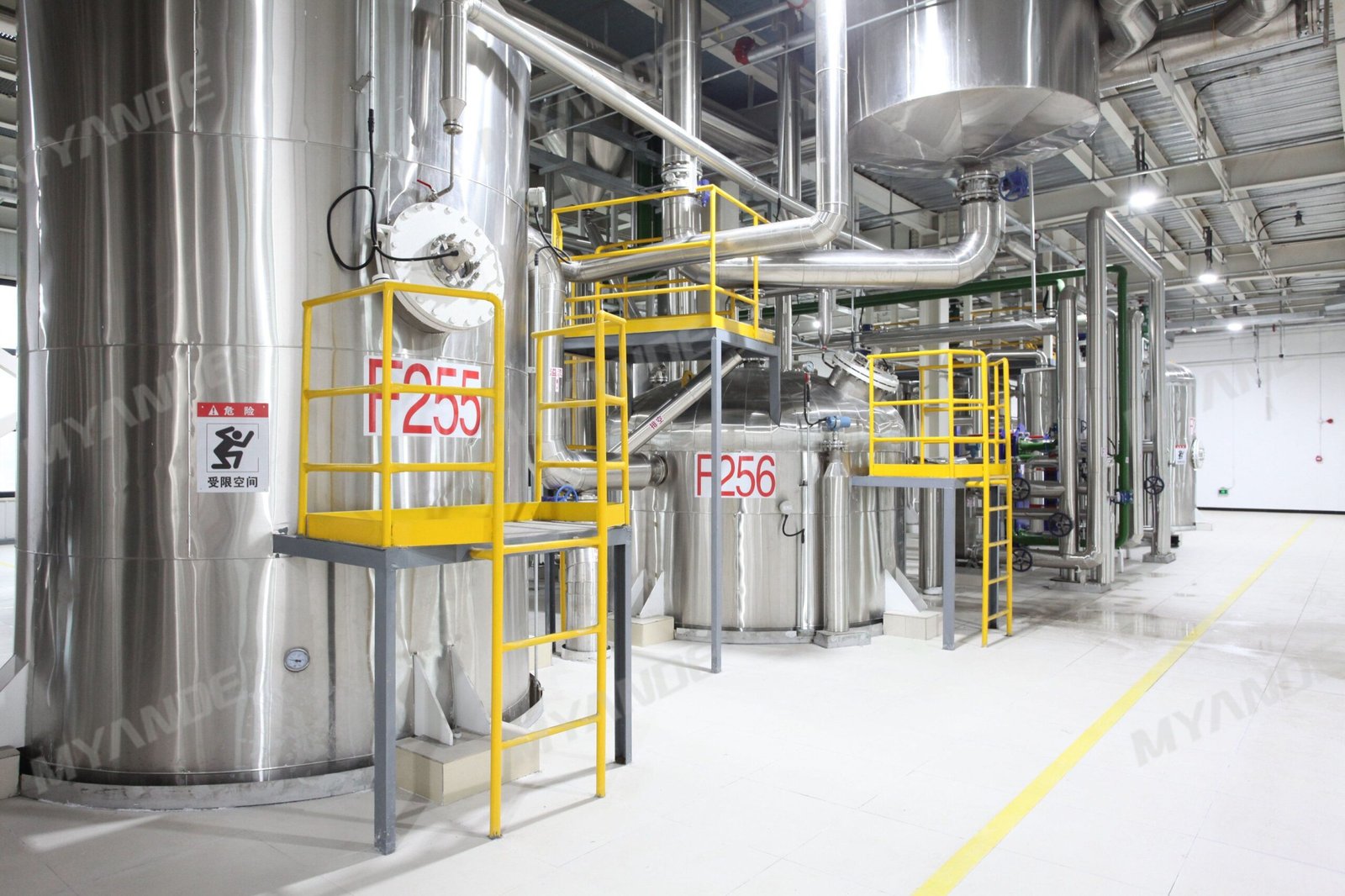
Deodorization Systems
Vacuum, steam stripping, heat exchange and retention control affect sensory quality and stability.
Product Selection
Crude versus refined sunflower oil for commercial buyers
The two products serve different supply chains. Buyers should select the product according to intended use, internal processing capability, specification, packaging and compliance needs.
Crude Sunflower Oil
Raw or partially clarified oil generally purchased by refineries and processors for further treatment.
- Contains more natural gums, waxes, pigments and free fatty acids
- Usually supplied in bulk formats
- Requires refinery suitability review
- Specification focuses on crude-oil processing characteristics
Refined Sunflower Oil
Processed oil intended for cooking, food manufacturing, wholesale distribution, bottling or private label.
- Lower levels of selected impurities and volatile compounds
- Neutral sensory profile and improved clarity
- Available in bulk or packaged formats
- Acceptance focuses on the finished product and batch evidence
B2B Supplier Evaluation
What buyers should verify before ordering refined sunflower oil
Understanding the refining process helps a buyer ask better questions. The next step is to connect the process to the actual seller, refinery, product, batch, packaging and shipment.
Legal Seller & Refinery Identity
Confirm the legal seller, actual refining or packing facility and the relationship between them.
Refining Pathway
Ask whether the proposed oil follows chemical or physical refining and why that pathway suits the feedstock.
Approved Specification
Agree product identity, parameter limits, test methods, shelf life and intended commercial use.
Batch Analysis
Ensure the Certificate of Analysis corresponds to the actual product lot proposed for shipment.
Current Facility Evidence
Check certificate holder, facility, activity scope, certificate number, issuer and validity dates.
Dewaxing & Cold Clarity
Confirm whether winterization is required and how cold-temperature clarity will be evaluated.
Packaging & Loading
Approve the exact bottle, drum, IBC, flexitank or tanker configuration and receiving requirements.
Commercial & Export Terms
Confirm price validity, Incoterm, named place, payment beneficiary, lead time and required shipment documents.
Refined Oil Supply & Export
From refining knowledge to a commercially usable quotation
A quotation should translate the required refined-oil specification into an exact product, quantity, packaging format, facility arrangement, delivery term and document package.
Product & Intended Use
Define whether the oil is for food manufacturing, wholesale, retail bottling, private label or foodservice.
Specification & Evidence
State technical limits, required analysis, facility evidence and destination-specific documents.
Packaging & Quantity
Confirm bottle, drum, IBC, flexitank or tanker format and the expected order schedule.
Destination & Incoterm
Use the exact named place to clarify freight, insurance, customs, risk and inland-delivery responsibilities.
Technical & Trade References
Independent resources for edible-oil standards and refining
These references help procurement and technical teams understand the broader refining, product-standard and international-trade framework. They do not replace order-specific evidence.
Codex Vegetable-Oil Standard
Definitions and composition or quality references for named vegetable oils, including sunflower oil.
Review Codex referenceAOCS Oil Refining
Technical overview of chemical and physical refining operations and the compounds removed.
Review AOCS refining guideAlfa Laval Edible-Oil Processing
Equipment-focused explanation of degumming, neutralization, dewaxing, bleaching and deodorization.
Review process systemsICC Incoterms Rules
Official guidance for allocating delivery obligations, cost and risk in international commercial transactions.
Review IncotermsRefining Process FAQ
Questions about refining sunflower oil
These answers summarize the process. The approved specification, batch analysis, facility evidence and commercial agreement govern the actual product.
What is the sunflower oil refining process?
It is the controlled industrial treatment of crude sunflower oil to reduce gums, free fatty acids, pigments, waxes, moisture, volatile compounds and other materials that can affect food-grade quality, stability and commercial use.
What are the main steps in refining sunflower oil?
A common route includes crude-oil pretreatment, degumming, neutralization or deacidification, washing and drying, bleaching, dewaxing or winterization, deodorization, final filtration and quality release.
Are seed cleaning and oil extraction part of refining?
No. Seed cleaning, preparation, pressing and solvent extraction are upstream production operations used to obtain crude oil. Refining begins with crude-oil pretreatment and purification.
What is the difference between chemical and physical refining?
Chemical refining removes free fatty acids through alkaline neutralization. Physical refining relies on effective pretreatment and removes free fatty acids by steam distillation during deodorization.
Why is sunflower oil dewaxed or winterized?
Sunflower oil may contain natural waxes that crystallize and create cloudiness at lower temperatures. Controlled cooling and filtration remove these waxes and improve cold clarity.
What happens during bleaching?
The oil is contacted with selected adsorbents to reduce pigments, oxidation products, residual soap, trace metals, phosphatides and other impurities before filtration.
What happens during deodorization?
Steam stripping under vacuum removes volatile odour and flavour compounds. In physical refining, deodorization also performs deacidification by removing free fatty acids.
How should buyers verify refined sunflower oil quality?
Approve a written specification, confirm the actual refinery and product scope, review current facility evidence and obtain a batch-specific Certificate of Analysis for the proposed shipment.
What is the minimum order for refined sunflower oil?
The Inter Oliya minimum commercial order is 10 metric tonnes. The practical loading quantity may vary according to packaging, refinery, route and product availability.
What information is needed for a refined sunflower oil quotation?
Provide the intended use, product specification, quantity, packaging, destination, Incoterm, target purchase date, private-label requirements and any testing, certification or import-document requirements.
Refined Sunflower Oil for B2B Buyers
Request refined sunflower oil against your exact specification
Send the intended use, required quality parameters, quantity, packaging, destination, Incoterm and verification requirements so the quotation can reflect the actual commercial order.