
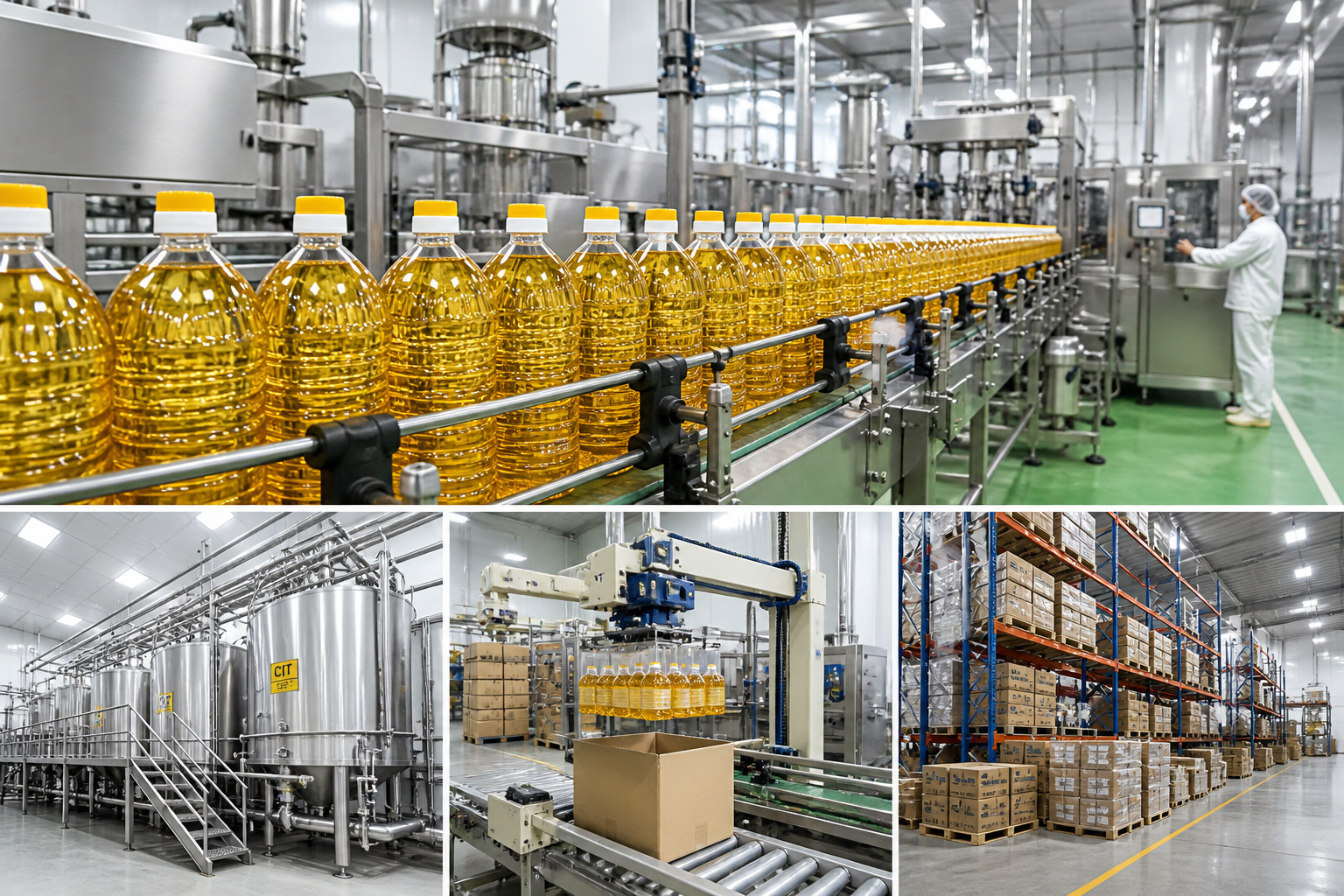
Industrial Frying & Food Manufacturing Supply
High Oleic Sunflower Oil Supplier for Frying & Food Production
Inter Oliya coordinates refined high oleic sunflower oil supply from Ukraine for snack producers, food manufacturers, commercial frying operations, foodservice distributors and importers. Orders start from 10 metric tonnes, with the fatty-acid profile, product quality, packaging, documents, destination and delivery basis confirmed through a written quotation.
- ≥75% Oleic Codex high-oleic category reference
- 10 MT MOQ Minimum commercial order
- From €910/MT Indicative starting oil basis
- COA Confirmed Contracted profile verified by batch
The page does not promise a fixed fry life, universal shelf life or delivered price. Suitability and performance depend on the actual oil and the buyer’s operating conditions.
Fatty-Acid Profile Confirmed
Oleic and linoleic values are agreed in the specification and checked by batch.
Frying Conditions Reviewed
Temperature, turnover, filtration, food moisture and fryer design affect performance.
Bulk to Packaged Formats
Bottles, foodservice packs, drums, IBCs, flexitanks and tanker enquiries.
Specification, COA & Facility File
Product and operating evidence are matched to the proposed order.
High Oleic Product Overview
What is high oleic sunflower oil?
High oleic sunflower oil is produced from sunflower varieties selected for a fatty-acid profile with substantially more oleic acid and generally less linoleic acid than conventional high-linoleic sunflower oil.
Under the Codex Standard for Named Vegetable Oils, high oleic sunflower oil contains not less than 75% oleic acid as a percentage of total fatty acids. The exact contracted value should still be stated in the product specification and confirmed in the batch-specific Certificate of Analysis.
Its composition generally provides greater oxidative and frying stability than conventional sunflower oil. However, oil performance is not determined by the product name alone. Initial quality, linoleic content, antioxidants, processing, storage and the buyer’s frying operation all matter.
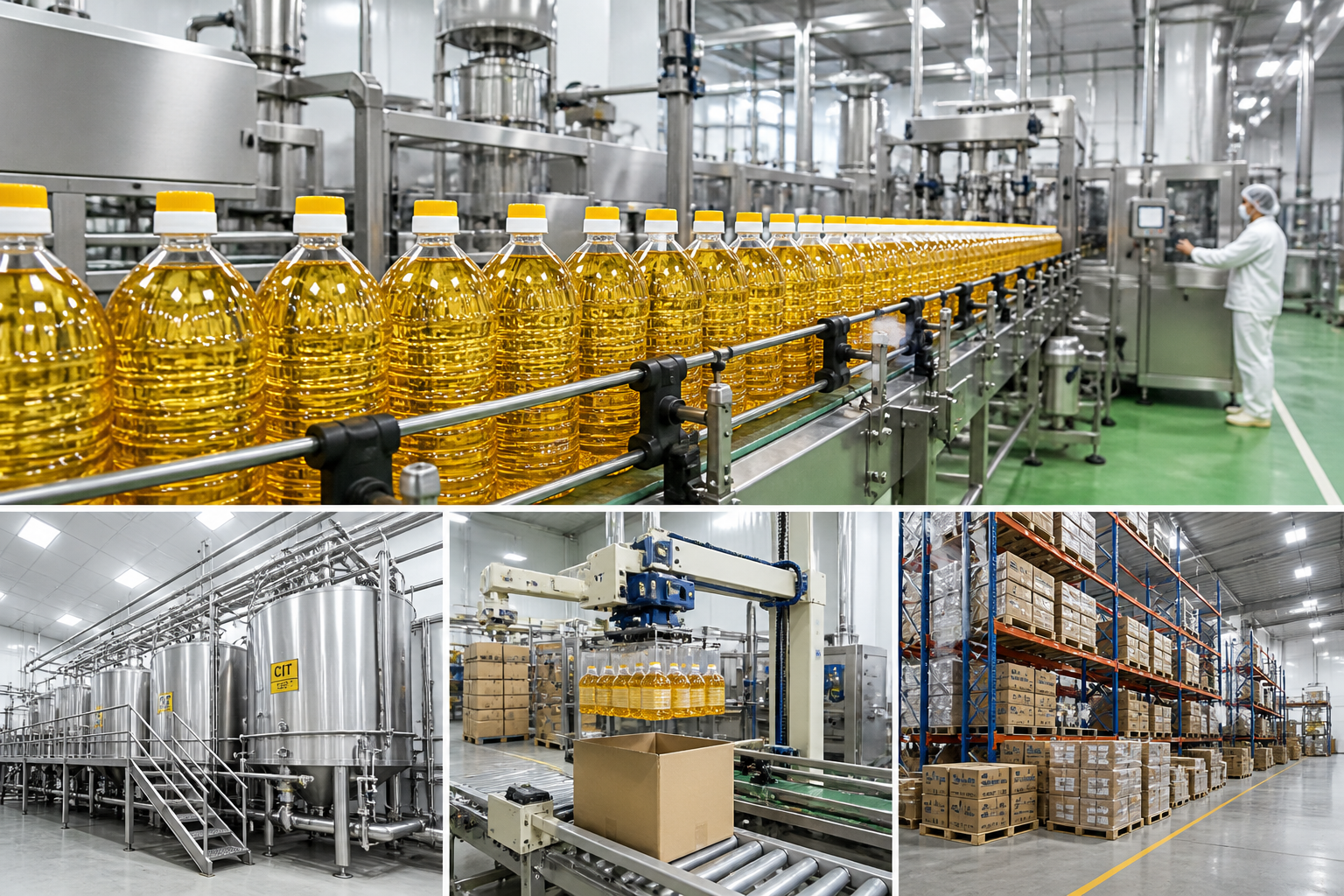
Contract oleic, linoleic and quality limits, then verify the actual production batch.
Commercial Buyer Segments
High oleic sunflower oil for industrial, foodservice and retail programmes
Each buyer should define the required performance, product specification, packaging and evidence.
Snack Manufacturers
Need stable frying performance, controlled taste, process consistency and batch documentation.
Frozen-Food Producers
Need oil suitable for prefrying, production throughput and the expected finished-product life.
Food Manufacturers
Need defined fatty-acid, quality, storage and ingredient specifications.
Restaurant Groups
Need operational guidance, foodservice formats and consistent supply across locations.
Foodservice Distributors
Need appropriate pack sizes, traceability, shelf-life evidence and customer documentation.
Importers
Need origin, facility, quality, packaging, route, customs and delivery clarity.
Private-Label Brands
Need finished-pack, claim, label, barcode and packing-facility approval.
Wholesale Distributors
Need transferable specifications, repeat-order feasibility and commercial packaging options.
Frying and Oxidative Stability
Why food manufacturers consider high oleic sunflower oil
Higher oxidative stability can support demanding frying operations, but the commercial decision should be based on actual trials and measurable oil-management data.
Stability is an operating result—not a fixed marketing number
The fatty-acid profile creates a strong starting point. The factory or kitchen still determines the practical result through temperature, filtration, turnover, top-up, food load and cleaning.
Greater Oxidative Stability
High oleic oil generally deteriorates more slowly than conventional high-linoleic sunflower oil under comparable frying conditions.
Industrial Frying Fit
Relevant to continuous, batch and repeated frying where heat exposure places sustained demands on the oil.
Neutral Refined Profile
Refining can support a neutral flavour, odour and appearance for many commercial food applications.
Potential Process Efficiency
Oil-management benefits should be demonstrated through plant trials, quality measurements and total-cost analysis.
Finished-Product Support
The selected oil can influence flavour stability and oxidation in fried or oil-containing products.
Flexible Commercial Formats
Supply can be evaluated for foodservice packs, drums, IBCs, flexitanks and other approved formats.
Technical & Commercial Specification
What the high oleic sunflower oil specification should define
Exact limits are agreed per buyer and facility. The page does not substitute a generic specification table for the final contracted document.
Identity, quality and use should be approved together
A high-oleic claim confirms composition, while food-manufacturing suitability also depends on refining status, initial quality, contaminants, packaging and storage.
Oleic Acid
Contract the required value and confirm that the batch meets the agreed high-oleic profile.
Linoleic & Other Fatty Acids
Review the complete fatty-acid composition because linoleic content can influence frying stability.
Free Fatty Acids or Acid Value
Define the parameter, method, unit and limit appropriate to the refined product.
Peroxide & Oxidation Status
Agree initial oxidation limits and any additional measures needed for the buyer’s application.
Moisture & Insoluble Impurities
Confirm limits supporting storage, processing and product consistency.
Colour, Odour & Appearance
Set sensory and visual criteria for the intended manufacturing or foodservice use.
Contaminants & Residues
State destination and buyer requirements for relevant contaminants, residues and food safety.
Shelf Life & Storage
Confirm the exact product, package, production-date basis and required storage conditions.
Industrial and Foodservice Applications
High oleic frying oil for snacks, prepared foods and commercial kitchens
Application fit must be confirmed against the buyer’s process, quality limits and finished product.
Potato Chips & Crisps
Continuous or batch frying programmes requiring controlled oil quality and product flavour.
Savoury Snacks
Extruded, pellet and coated snacks with frying or oil-application requirements.
Frozen Fried Foods
Prefrying for fries, vegetables, appetizers and prepared frozen products.
Meat, Poultry & Seafood
Commercial frying applications where food moisture and production load affect oil degradation.
Bakery & Formulated Foods
Oil-based formulations requiring a defined fatty-acid and sensory profile.
Quick-Service Restaurants
High-volume frying programmes requiring consistent pack formats and operational controls.
Catering & Foodservice
Commercial kitchens and distributors requiring foodservice packs and reliable documentation.
Private-Label Frying Oil
Retail or professional packs with approved claims, labels, cartons and packing-facility scope.
Fryer and Process Evaluation
Information needed before estimating practical frying performance
Buyers should test the oil in their actual system rather than relying on an unsupported “lasts twice as long” or fixed fry-life promise.
Frying Temperature
Record normal, maximum and recovery temperatures, plus any shutdown or standby cycles.
Fryer Design
Oil volume, surface exposure, heating method, turnover and dead zones affect degradation.
Food Moisture & Load
Water, crumbs, breading, seasoning and production throughput influence oil quality.
Filtration
Filter type, frequency, effectiveness and cleaning determine removal of particles and residues.
Oil Turnover & Top-Up
Fresh-oil addition, product uptake and total system turnover materially affect results.
Quality Limits
Define total polar compounds, free fatty acids, sensory or other internal rejection criteria.
Storage Before Use
Light, air, heat, opened containers and tank management influence initial quality.
Trial & Cost Review
Compare oil quality, product results, consumption, waste and operating cost under controlled trials.
Packaging & Bulk Supply
Select the format that fits consumption, storage and receiving equipment
Availability and final minimum quantities depend on the product, facility, pack, destination and commercial production run.
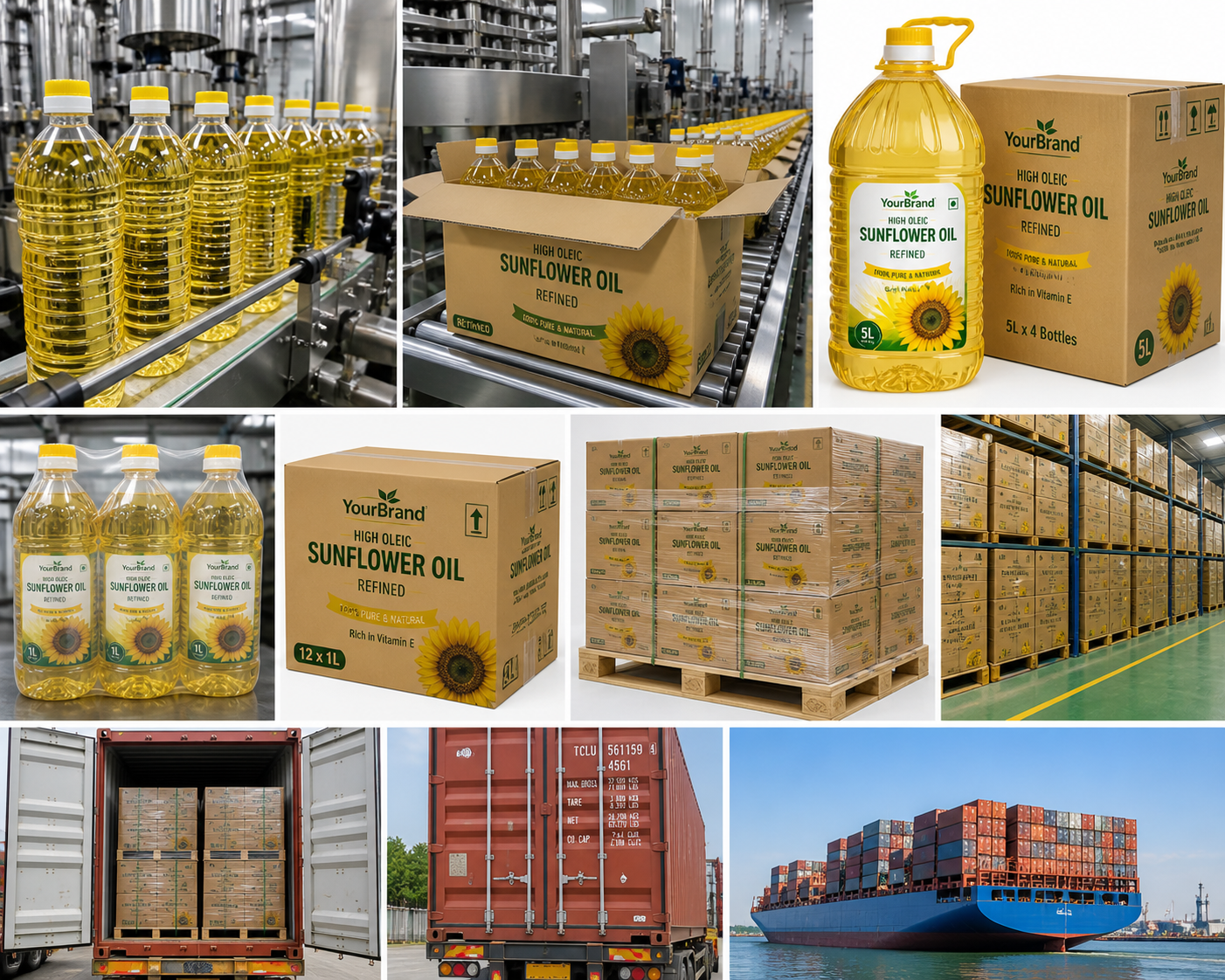
Bottles and Foodservice Containers
For restaurants, distributors, commercial kitchens and private-label programmes, subject to packing confirmation.
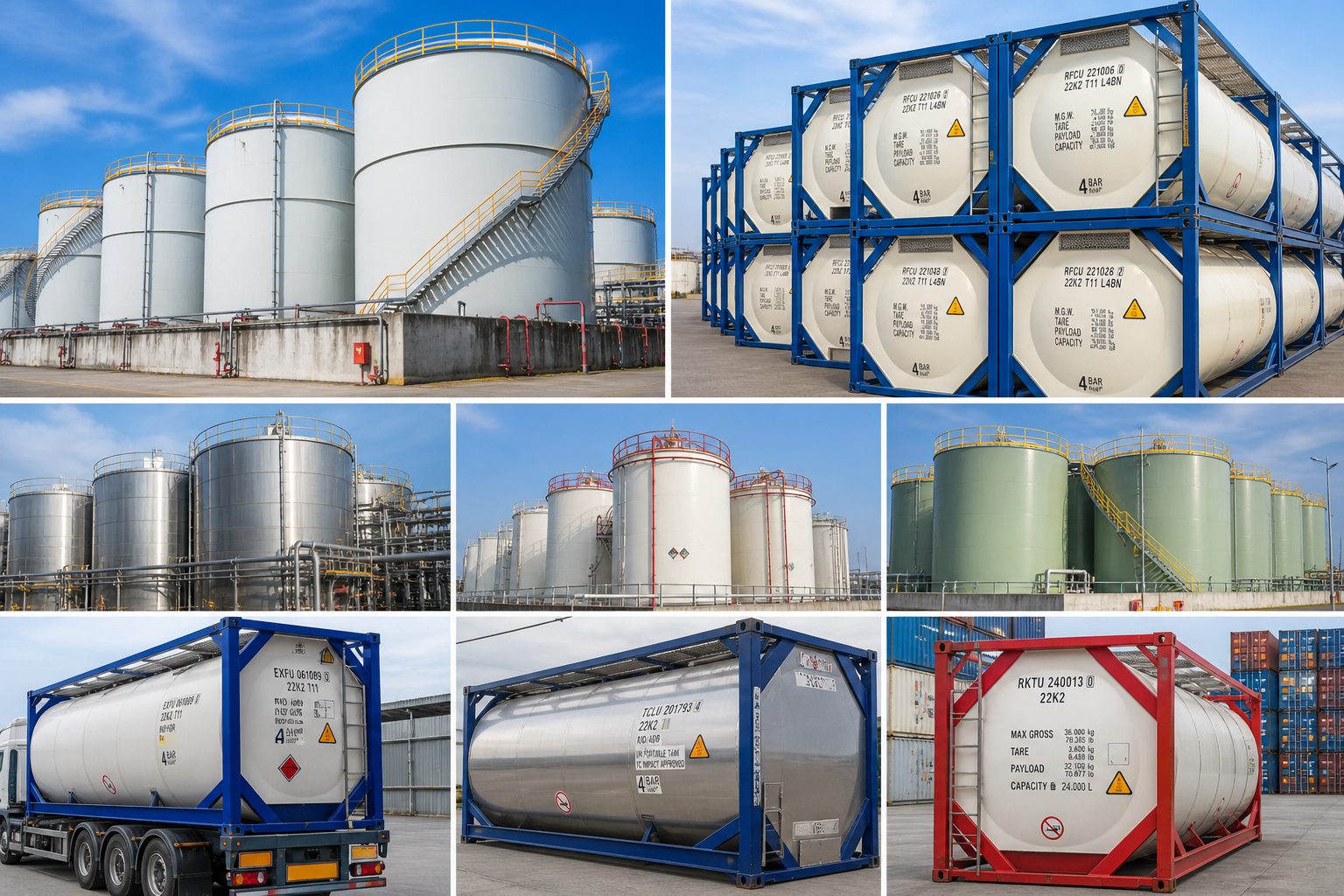
Drums and IBCs
For manufacturers with suitable pumping, storage, hygiene, handling and traceability controls.
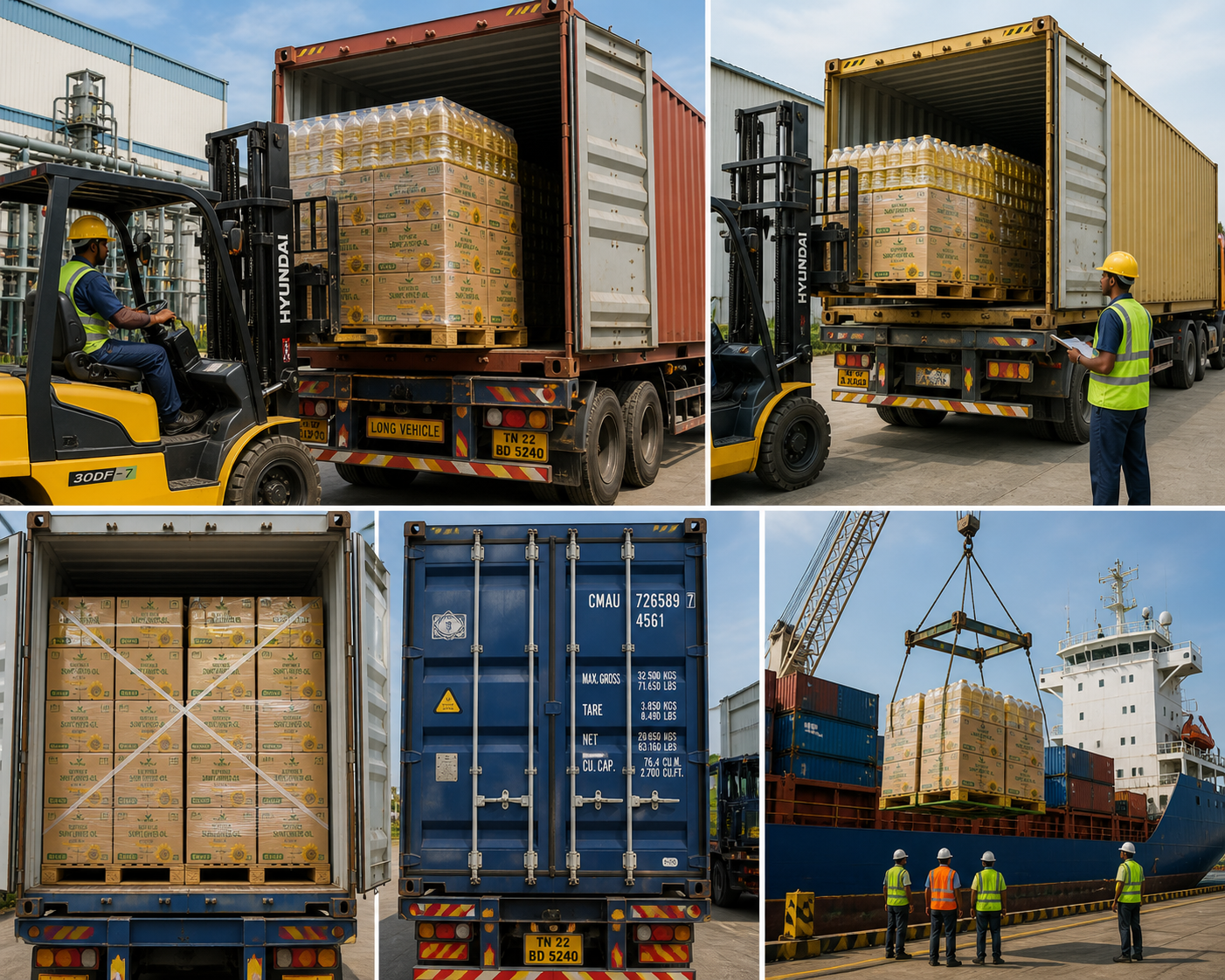
Flexitank Supply
For larger-volume buyers with approved route, liner, payload, discharge and receiving infrastructure.

Road or ISO Tank
Subject to previous-cargo, cleaning, sampling, seals, route and receiving-tank requirements.
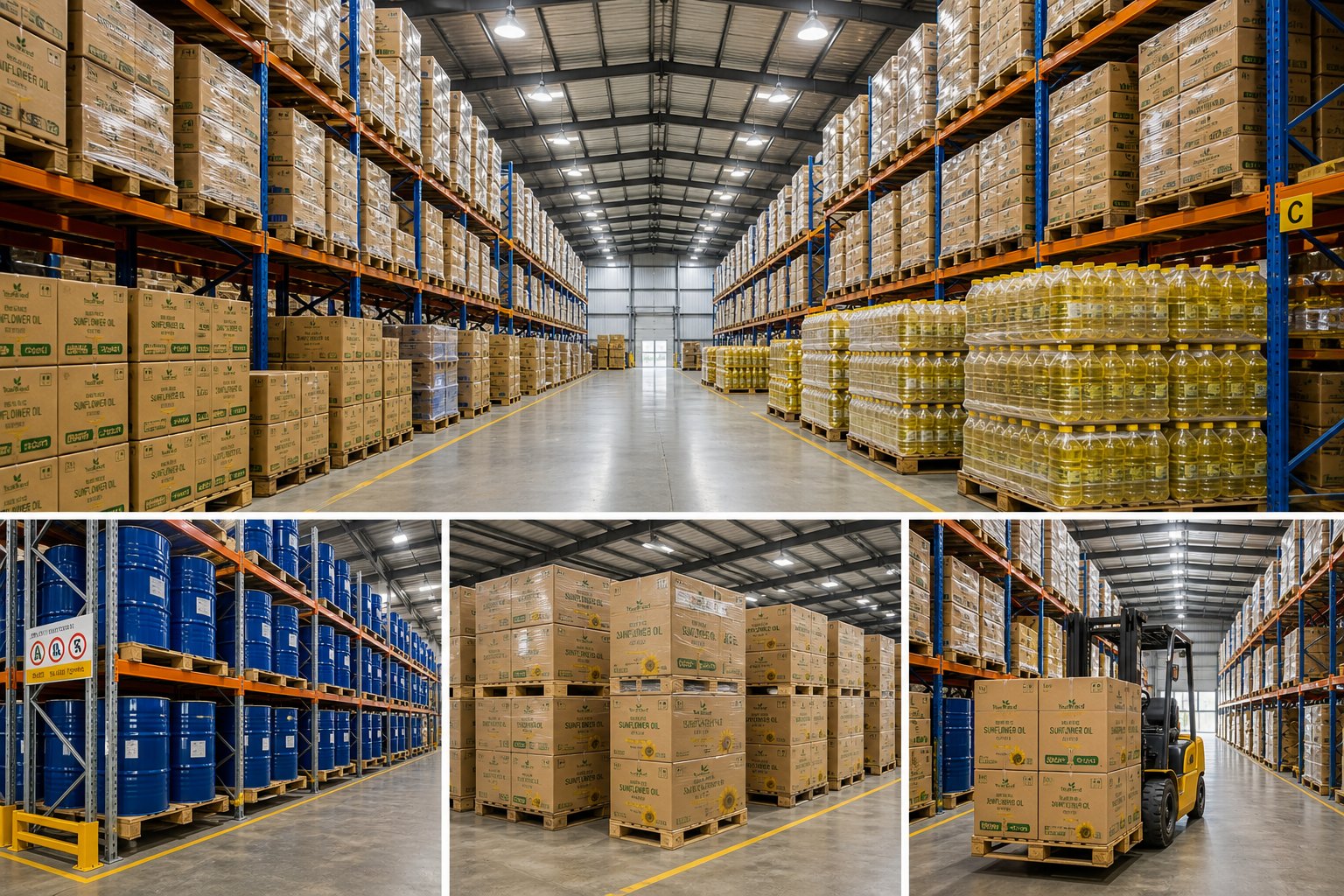
Cartons and Pallets
For bottled or foodservice formats requiring case coding, pallet identity and export handling.
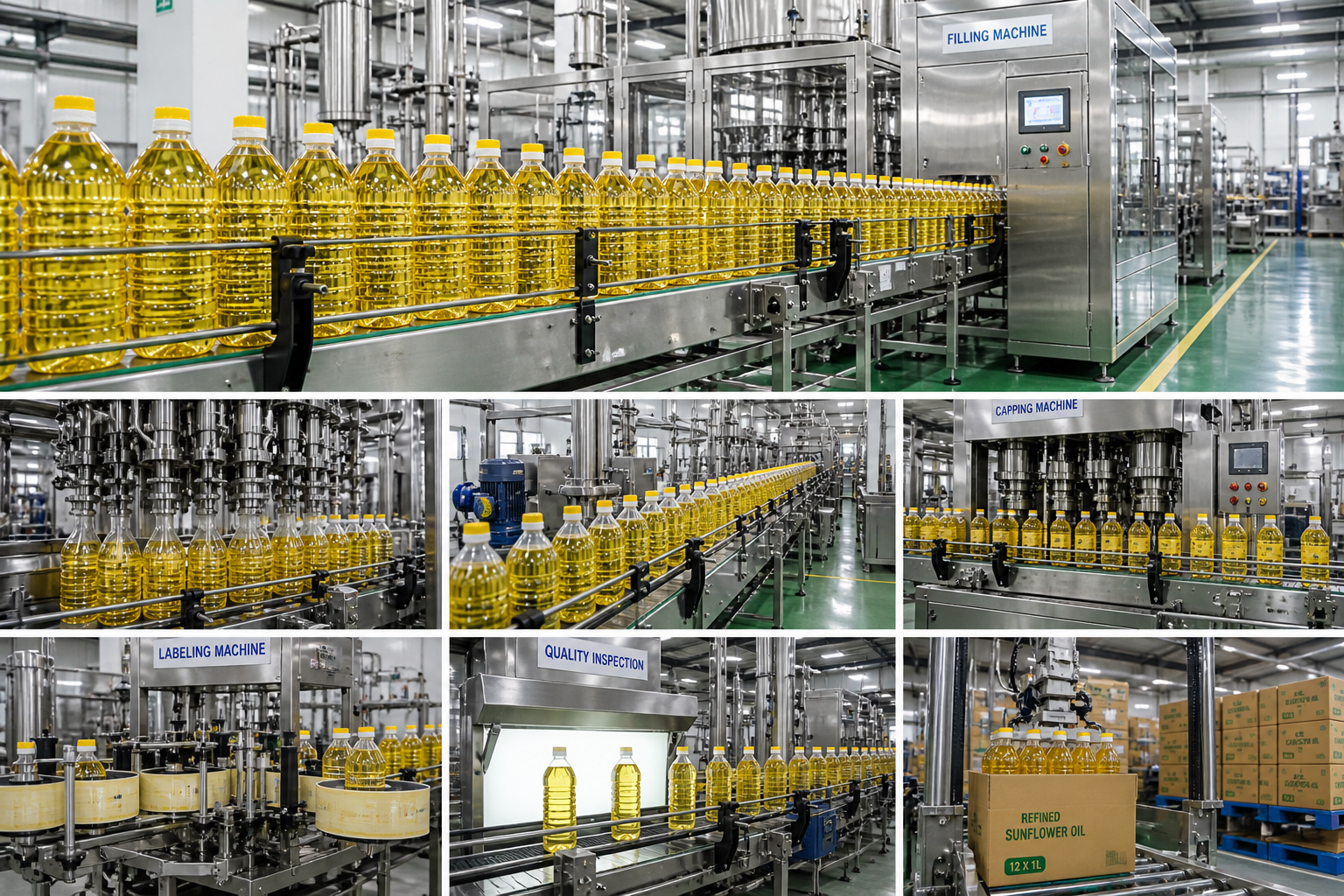
Private-Label Packaging
Requires bottle, closure, label, artwork, claims, carton, barcode and production-run approval.
Quality, Facility & Batch Evidence
Documents serious food-industry buyers should review
Certification logos and generic product names do not replace an order-specific technical file.
Approved Product Specification
Fatty-acid identity, quality parameters, storage, shelf life, packaging and intended use.
Batch Certificate of Analysis
Results linked to the proposed lot, including the contracted high-oleic identity and agreed quality limits.
Producer & Facility Details
Legal producer, refinery or packing facility, activity and relationship to the quoted supply.
Food-Safety Evidence
Current facility-specific HACCP, ISO 22000 or other evidence only where holder, scope and validity match.
Traceability & Release
Lot coding, tank or pack identity, hold-and-release status and document reconciliation.
Packaging & Food Contact
Package specification, cleanliness, previous cargo, closures, seals and food-contact suitability.
Origin & Commercial Documents
Applicable origin, invoice, packing and transaction records connected to the actual order.
Inspection & Sampling
Agreed sample identity, method, laboratory, retained sample and third-party inspection where required.
B2B Procurement Workflow
From frying requirement to an approved high oleic oil order
The process confirms composition and application fit before price and shipment are treated as final.
Define the Application
Provide fryer type, food, temperature, operating hours, quality limits and intended use.
Define the Product
Confirm refined status, fatty-acid profile, required quality and destination requirements.
Confirm Quantity & Packaging
State first-order and repeat volume, pack format, storage and unloading capability.
Identify Product & Facility
Review the proposed producer, refinery, packer or loading facility and availability.
Approve the Specification
Agree fatty acids, quality limits, methods, documents, shelf life and packaging.
Issue Written Quotation
State product, quantity, price, validity, Incoterm, named place, lead time and exclusions.
Buyer Reviews Evidence
Verify company, facility, batch, COA, certification, inspection and payment details.
Prepare & Dispatch
Allocate, pack or load, inspect, reconcile documents and release the shipment.
MOQ & High Oleic Sunflower Oil Pricing
Commercial pricing from 10 metric tonnes
Final pricing depends on the contracted profile, batch quality, quantity, packaging, documents, destination, route and delivery term.
Fatty-Acid Specification
The required oleic and linoleic profile and additional quality limits affect product selection.
Quantity & Repeat Volume
First-order size, production run, allocation and forecast volume influence commercial terms.
Packaging
Bottles, foodservice packs, drums, IBCs, flexitanks, tanks, cartons and pallets affect cost.
Documents & Testing
Buyer-specific testing, claims, samples or third-party inspection may affect time and cost.
Destination & Incoterm
Freight, insurance, terminals, inland delivery and risk allocation depend on the route.
Market Validity
Edible-oil and freight conditions change, so every offer includes a stated validity period.
Current Company Information
Verify the legal supplier and the order-specific operating facility
The seller, producer, refinery, packer and loading facility may be different entities. Their roles must be identified accurately in the transaction.
Transparent commercial and operational structure
Inter Oliya is a registered Ukraine-based supply and trade company. The actual producer, refinery, packing facility, warehouse or loading point is confirmed for the proposed order.
The registered office is provided for legal verification and is not presented as a refinery, factory, warehouse or loading terminal.
High Oleic Sunflower Oil FAQ
Questions from frying, manufacturing and procurement teams
The visible answers provide general guidance. The approved specification, COA, quotation and contract govern the actual order.
What is high oleic sunflower oil?
It is sunflower oil with a high proportion of oleic acid. Codex defines the high-oleic sunflower-oil category as containing not less than 75% oleic acid as a percentage of total fatty acids.
Is high oleic sunflower oil suitable for industrial frying?
It is commonly evaluated for industrial and repeated frying because its composition generally provides greater oxidative stability than conventional high-linoleic sunflower oil. Actual suitability should be confirmed through specification review and plant trials.
Does high oleic sunflower oil always last longer in a fryer?
No fixed fry-life can be guaranteed. Results depend on the oil's exact composition and initial quality, fryer temperature, filtration, food moisture, turnover, top-up and operating controls.
What oleic-acid level should be specified?
The Codex category starts at 75% oleic acid. Buyers may contract a different or tighter target according to their application, provided it is confirmed in the specification and batch COA.
What is the minimum commercial order?
The standard minimum commercial order is 10 metric tonnes. Practical minimums may be higher for particular packaging, printing or facility production runs.
What is the indicative starting price?
The indicative starting oil basis is from €910 per metric tonne for eligible configurations. Final pricing depends on specification, quantity, package, documents, destination and Incoterm.
Which packaging formats may be considered?
Enquiries may cover bottles, foodservice containers, drums, IBCs, flexitanks, road tankers, ISO tanks, cartons and pallets, subject to facility and route confirmation.
Which documents should food manufacturers request?
Request the approved specification, batch COA, producer and facility details, food-safety evidence, traceability, packaging information and applicable origin and shipment documents.
Can the oil be supplied for private-label frying-oil programmes?
Private-label enquiries can be reviewed, but bottle, closure, artwork, claims, carton, barcode, packing facility, run size and destination requirements must be approved.
Which delivery terms are available?
Buyers may request a preferred Incoterm. The written quotation confirms the workable rule and named place after route, customs and commercial feasibility are reviewed.
Ukraine-Origin High Oleic Sunflower Oil
Request a quote based on your frying process and technical specification
Send the application, oleic target, quality limits, quantity, packaging, destination, required documents and delivery basis for an order-specific supply review.