
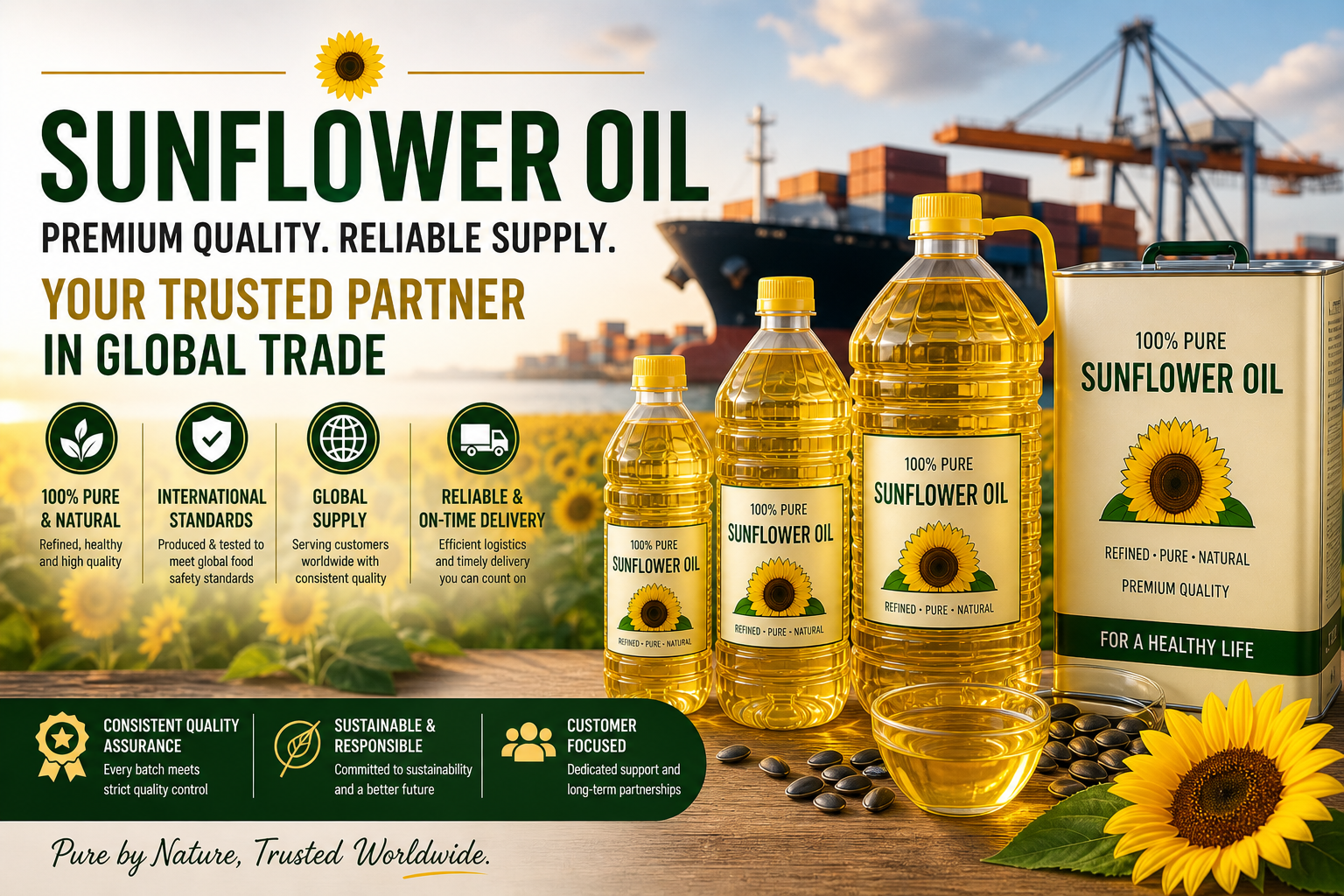
How to Import Sunflower Oil into Germany
Importing sunflower oil into Germany requires a clear understanding of product selection, supplier verification, food safety regulations, packaging standards, and international logistics. For importers, distributors, and food manufacturers, a structured import process helps reduce risk and ensures smooth delivery.
Germany is one of Europe’s largest edible oil markets, with strong demand for refined sunflower oil, bulk supply, and private label cooking oil products. Businesses importing sunflower oil must ensure compliance with EU food regulations while working with reliable suppliers capable of handling export requirements.
Step 1: Choose the Right Sunflower Oil Type
Before importing sunflower oil, buyers must define the product type based on their business needs.
- Refined sunflower oil for retail and food production
- Bulk sunflower oil for industrial and wholesale supply
- Private label sunflower oil for branded distribution
Explore product options: Refined Sunflower Oil | Bulk Supply | Private Label Solutions
Step 2: Select a Reliable Sunflower Oil Supplier
Choosing a reliable supplier is one of the most critical steps in the import process. Buyers should work with suppliers that provide consistent quality, proper documentation, and export support.
- Verified export experience
- Clear documentation and certification
- Stable supply capacity
- Flexible packaging options
Learn more: Sunflower Oil Supplier for Germany
Step 3: Understand Import Regulations in Germany
Sunflower oil imports into Germany must comply with European Union food safety and traceability regulations.
- Food safety compliance (HACCP, ISO)
- Product traceability and origin documentation
- EU labeling and packaging requirements
- Customs and import documentation
For official guidance, visit: European Commission Food Safety
Step 4: Choose Packaging Format
Packaging plays a major role in logistics efficiency and product positioning in the German market.
- 1L, 2L, 5L bottles for retail
- 10L–20L containers for food service
- Palletized cartons for distribution
- Bulk containers for industrial use
Learn more: Packaging Solutions | Packaging Types
Step 5: Plan Logistics and Delivery Terms
Importers must decide on shipment methods and delivery terms before placing an order.
- FOB (Free On Board)
- CIF (Cost, Insurance, Freight)
- DAP (Delivered at Place)
Explore: Shipping Methods | Delivery Terms | Export Logistics
Official Incoterms reference: ICC Incoterms Rules
Step 6: Prepare Import Documentation
Proper documentation ensures smooth customs clearance and avoids delays.
- Commercial invoice
- Packing list
- Certificate of origin
- Quality certificates
- Transport documents
Learn more: Export Compliance
Step 7: Verify Quality and Certifications
German buyers require strict quality assurance before accepting sunflower oil imports.
- HACCP certification
- ISO standards
- Food-grade compliance
View: Certifications | ISO Standards | HACCP Certification
Industry reference: Food and Agriculture Organization
Common Challenges When Importing Sunflower Oil
- Incorrect documentation
- Unreliable suppliers
- Packaging issues
- Logistics delays
- Regulatory non-compliance
Working with an experienced supplier reduces these risks significantly.
Request a Sunflower Oil Import Quote for Germany
If you are planning to import sunflower oil into Germany, Inter Oliya can support your requirements with bulk supply, private label production, packaging options, and export logistics.
Submit your request: Request Quote | Contact Us
Frequently Asked Questions
Do I need certification to import sunflower oil into Germany?
Yes, HACCP, ISO, and EU compliance are required.
What is the best delivery term for importing?
DAP is commonly preferred for direct delivery, while FOB and CIF are also widely used.
Can I import private label sunflower oil?
Yes, private label sunflower oil is widely used by German retailers and distributors.
What is the minimum order quantity?
MOQ typically starts from 5 MT depending on supplier and packaging.