
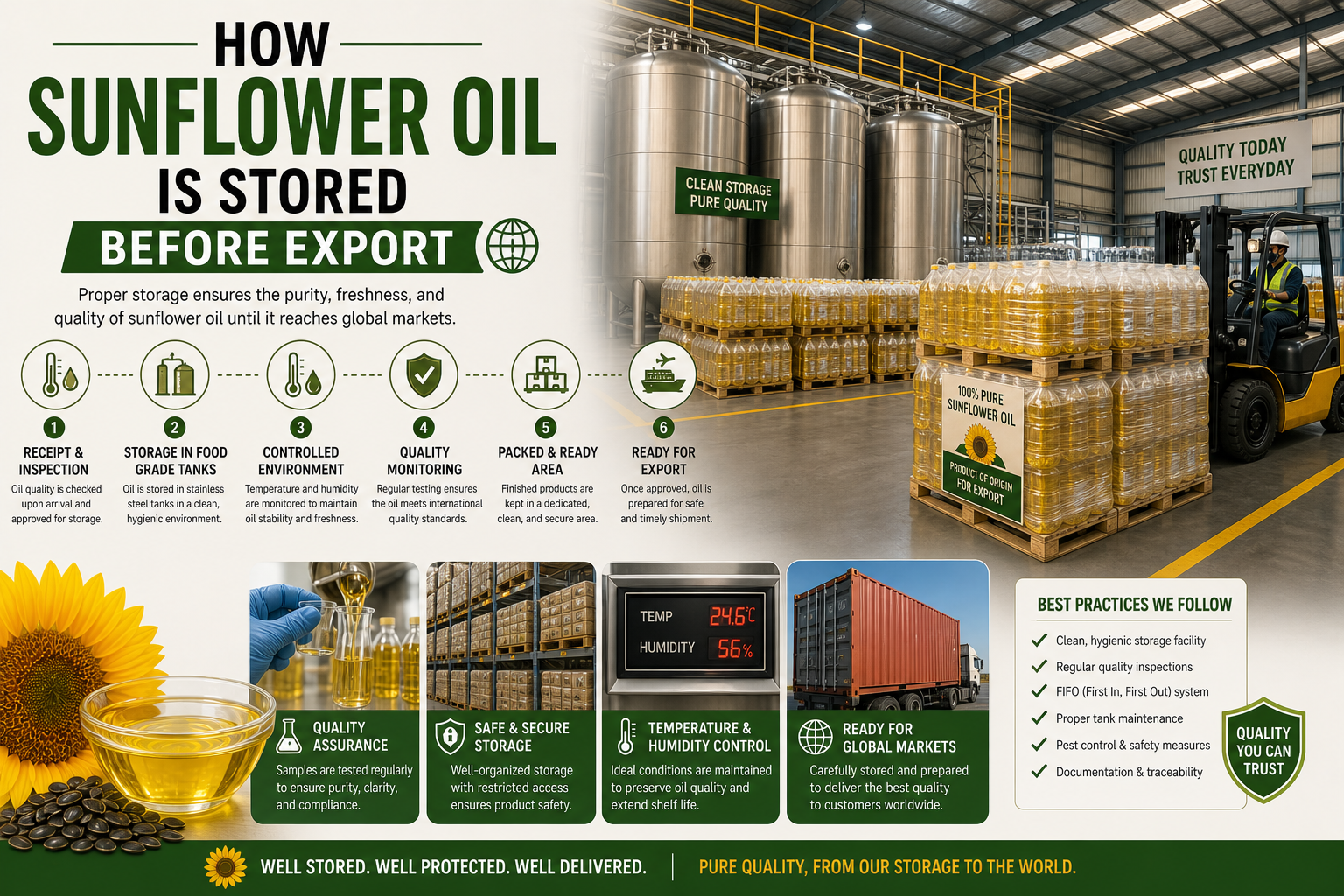
How Sunflower Oil Is Stored Before Export
Proper storage is a critical stage in the sunflower oil supply chain, ensuring that the product maintains its quality, stability, and safety before it is shipped to international buyers. Whether in bulk or packaged form, sunflower oil must be stored under controlled conditions to prevent oxidation, contamination, and degradation.
For importers, distributors, and food manufacturers, understanding how sunflower oil is stored before export is essential. Storage conditions directly affect shelf life, product performance, and compliance with international food standards.
At Inter Oliya’s storage and logistics systems, storage is integrated with production, packaging, and export operations to ensure reliable supply for global markets.
Why Proper Storage Matters for Sunflower Oil
Sunflower oil is sensitive to environmental factors such as light, temperature, oxygen, and moisture. If not stored correctly, the oil can oxidize, lose quality, or develop off-flavors.
Proper storage ensures that:
- The oil maintains its chemical stability
- Oxidation and spoilage are minimized
- Product quality remains consistent during storage
- The oil meets buyer specifications upon delivery
For global food supply chains, proper storage practices are essential. Organizations such as the Food and Agriculture Organization (FAO) emphasize safe storage and handling of edible oils as part of food safety systems.
Main Storage Methods for Sunflower Oil
Sunflower oil is stored using different systems depending on whether it is in bulk or packaged form.
1. Bulk Storage Tanks
Bulk sunflower oil is typically stored in large industrial tanks made from stainless steel or coated materials designed for food-grade liquids. These tanks are used before packaging or bulk export.
Key features of bulk storage tanks include:
- Temperature control systems
- Sealed environments to prevent contamination
- Protection from light exposure
- Efficient handling for large volumes
Bulk storage is commonly used for bulk sunflower oil supply and export operations.
2. Storage of Packaged Sunflower Oil
Once sunflower oil is packaged into bottles, containers, or drums, it is stored in warehouses before shipment.
These storage facilities are designed to:
- Protect packaging from damage
- Maintain stable environmental conditions
- Ensure efficient inventory management
Businesses working with retail-ready products can explore sunflower oil packaging types to understand how packaging interacts with storage conditions.
Temperature Control in Storage
Temperature is one of the most important factors in sunflower oil storage. High temperatures can accelerate oxidation, while low temperatures may cause cloudiness in oils that have not been fully dewaxed.
Storage systems are designed to maintain stable temperature conditions that preserve oil quality. Controlled environments help ensure that the oil remains suitable for cooking, food manufacturing, and retail use.
Understanding the sunflower oil refining process also helps explain how refining improves oil stability before storage.
Protection from Light and Oxygen
Exposure to light and oxygen can degrade sunflower oil over time. This is why storage systems are designed to minimize these exposures.
- Opaque or insulated storage tanks reduce light exposure
- Sealed containers limit oxygen contact
- Proper handling reduces air entry during transfer
These measures help maintain oil freshness and extend shelf life.
Hygiene and Contamination Control
Maintaining hygiene is essential in sunflower oil storage. Storage facilities must be clean and free from contaminants that could affect product safety.
Quality assurance systems ensure that storage conditions meet food safety requirements. A structured quality control system helps monitor storage conditions and prevent contamination.
International food safety systems such as ISO 22000 emphasize hygiene and risk management throughout the food supply chain.
Storage Duration and Shelf Life
The shelf life of sunflower oil depends on storage conditions, refining quality, and packaging type. Properly stored refined sunflower oil typically has a longer shelf life compared to crude oil.
Key factors affecting shelf life include:
- Temperature stability
- Exposure to air and light
- Moisture levels
- Quality of packaging
Buyers sourcing refined sunflower oil should consider these factors when planning storage and distribution.
Storage Before Export Shipment
Before export, sunflower oil is stored in preparation for shipment. This stage includes coordinating packaging, documentation, and logistics.
Bulk oil may be transferred from storage tanks to flexitanks, ISO tanks, or other transport containers. Packaged oil is prepared for palletized shipment.
Buyers can review shipping methods and export logistics to understand how stored oil is prepared for international transport.
Delivery terms such as FOB, CIF, DAP, and DDP define responsibilities during shipment. The ICC Incoterms rules provide guidance on these trade terms.
Storage and Private Label Sunflower Oil
For private label sunflower oil, storage plays a key role in maintaining product quality before distribution. Retail products must be stored in conditions that preserve appearance, taste, and packaging integrity.
Even minor quality issues during storage can affect brand reputation. Businesses developing branded products can explore private label sunflower oil solutions for consistent supply and handling.
Why Storage Conditions Matter for International Buyers
For international buyers, storage conditions directly impact product reliability. Oil that is improperly stored may not meet specifications upon arrival, leading to financial losses or rejected shipments.
Buyers should evaluate supplier storage systems as part of their procurement process. Reliable suppliers integrate storage with production, quality control, and logistics to ensure consistent delivery.
Conclusion
Sunflower oil storage before export is a critical process that ensures product quality, safety, and stability. From bulk tank storage to packaged warehouse systems, each stage plays a role in maintaining oil integrity.
Proper storage protects the oil from environmental factors, supports shelf life, and ensures that the product arrives in optimal condition for buyers.
If your business requires reliable sunflower oil supply supported by proper storage and logistics systems, you can explore refined sunflower oil or submit an inquiry through the request quote page.
Frequently Asked Questions
How is sunflower oil stored before export?
Sunflower oil is stored in bulk tanks or warehouses under controlled conditions to maintain quality before shipment.
Why is temperature control important in oil storage?
Temperature control helps prevent oxidation and maintains oil stability during storage.
Can sunflower oil spoil during storage?
Yes, improper storage can lead to oxidation, off-flavors, and reduced shelf life.
How long can sunflower oil be stored?
Shelf life depends on storage conditions, refining quality, and packaging, but proper storage helps extend usability.
Is storage important for private label sunflower oil?
Yes, proper storage ensures product quality and protects brand reputation.